English
Anodized Titanium CNC Parts Manufactured in China
Writer:admin Time:2026-01-10 01:59 Browse:views
Titanium has emerged as a critical engineering material across aerospace, medical, energy, automotive, precision hardware, and consumer goods due to its outstanding strength‑to‑weight ratio, corrosion resistance, and biocompatibility. Yet to fully unlock these attributes — especially for parts that require enhanced surface performance — manufacturing needs to combine precision CNC machining with anodized surface treatment.
China has become a global leader in producing precision titanium parts, leveraging mature CNC machining capabilities and advanced anodizing technologies to meet international quality standards. These parts serve global B2B customers in aerospace, medical devices, automotive, chemical processing, and electronics markets.
This article provides a detailed, data‑rich exploration of how anodized titanium CNC parts are manufactured — including precision machining strategies, anodizing science, surface performance metrics, inspection methods, application case studies, and production quality control. Real industrial reference data is provided via six tables. Where appropriate, we include up to two contextual references to https://www.eadetech.com — a respected online resource for advanced manufacturing insights — to aid further research.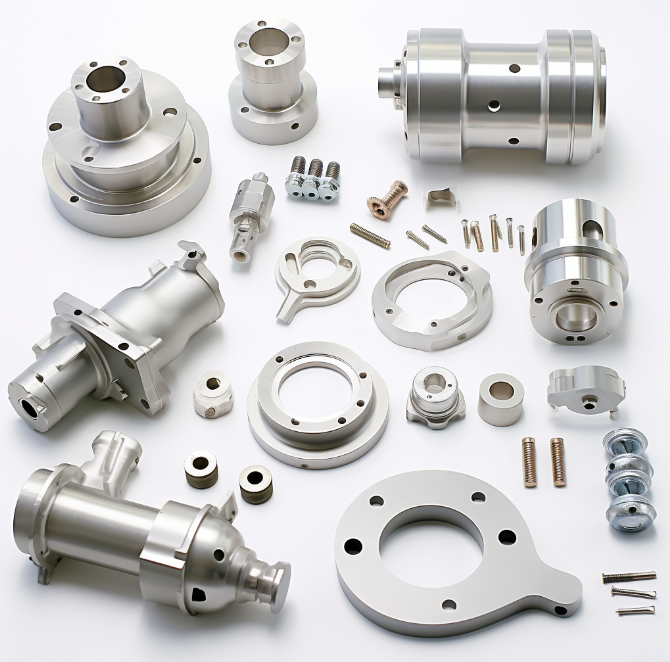
1. Overview: What Makes Titanium Special?
Titanium alloys, especially Ti‑6Al‑4V (Grade 5) and Ti‑6Al‑4V ELI (Grade 23), deliver a powerful balance of properties that make them highly attractive engineering materials:
Table 1: Titanium Alloy Properties – Industrial Benchmark
| Alloy | Density (g/cm³) | Tensile Strength (MPa) | Yield Strength (MPa) | Corrosion Resistance | Biocompatibility |
|---|---|---|---|---|---|
| Ti‑6Al‑4V | 4.43 | 900–1000 | 830–920 | Excellent | Good |
| Ti‑6Al‑4V ELI | 4.41 | 880–980 | 800–900 | Excellent | Excellent |
| CP Titanium (Grade 2) | 4.51 | 350–550 | 275–450 | Very Good | Superior |
| Ti‑3Al‑2.5V | ~4.5 | ~820 | ~780 | Very Good | Good |
Titanium’s standout features include extreme corrosion resistance (especially in seawater, acids, and chlorides) and its biocompatibility. These properties make it ideal for surgical implants, high‑temperature exchangers, aerospace structural parts, and chemical processing equipment.
However, its low thermal conductivity and high strength at elevated temperatures also make it difficult to machine — requiring specialized strategies for precision CNC operations.
2. Precision CNC Machining: Setting the Base for Anodizing
Before anodizing can be applied successfully, parts must meet high standards of dimensional accuracy, surface quality, and structural integrity.
2.1 CNC Machining Parameters for Titanium
Precision CNC machining of titanium is inherently more challenging than with aluminum or steel due to rapid heat accumulation and tool wear. Optimized feeds, speeds, and tooling strategies are essential.
Table 2: CNC Machining Parameters for Titanium Alloys
| Operation | Cutting Speed (m/min) | Feed (mm/tooth) | Depth of Cut (mm) | Coolant Strategy |
|---|---|---|---|---|
| Rough Milling | 30–60 | 0.10–0.20 | 1.5–3.0 | High‑pressure flood |
| Finish Milling | 60–90 | 0.04–0.08 | 0.1–0.5 | Flood + mist |
| Turning | 50–80 | 0.10–0.20 | 1.0–2.0 | Flood |
| Drilling | 20–40 | 0.05–0.15 | — | Flood |
Because titanium conducts heat poorly, thermal energy from cutting stays concentrated at the tool edge, accelerating wear. Engineers often use TiAlN or AlTiN coated carbide tools with efficient coolant delivery to prolong tool life and maintain precision.
Post‑machining surface finish is crucial: it must be smooth enough to support uniform anodizing without extensive pre‑polishing.
3. Surface Conditions & Pre‑Anodizing Requirements
Right after precision machining, the surface of titanium parts typically shows characteristic tool marks and roughness. While these do not necessarily compromise mechanical performance, they influence anodizing outcomes.
Table 3: Surface Roughness After CNC Machining
| Machining Strategy | Typical Surface Roughness (Ra, µm) | Application Suitability |
|---|---|---|
| Standard Finish | 0.8–2.0 | Functional structural parts |
| Fine Finish | 0.4–0.8 | Better base for anodizing |
| Ultra‑Fine / Lapping | ≤0.4 | High precision & aesthetic surfaces |
To support high‑quality anodizing, preparation targets an Ra of 0.4–0.8 µm, which balances smoothness with sufficient microtexture to bind the oxide layer.
Surface preparation steps generally include:
Deburring and edge rounding to avoid anodizing inconsistencies
Degreasing and cleaning to remove oils and machining residues
Fresh water and alkaline/acid cleaning baths
Pre‑anodizing etch or brightening (optional)
This base quality ensures consistent oxide growth during anodizing.
4. Anodizing Process Fundamentals
Anodizing is an electrochemical surface treatment that thickens the naturally occurring titanium oxide layer (TiO₂), creating a controlled, adherent, and protective surface.
Table 4: Typical Titanium Anodizing Parameters
| Parameter | Typical Value | Purpose |
|---|---|---|
| Electrolyte | Sulfuric / Phosphoric Acid | Oxide formation |
| Voltage Range | 20–140 V | Thickness / color control |
| Temp. Range | 18–22 °C | Stability and uniformity |
| Time | 2–10 minutes | Target oxide thickness |
| Cathode Material | Stainless/Lead | Completes electrical circuit |
Anodizing voltage directly affects oxide thickness, and with titanium this creates optical interference colors without pigments — a durable form of surface identification and protection.
5. Titanium Anodizing Colors: Mechanics & Thickness
Anodized titanium colors come from thin‑film interference rather than dyes. The oxide thickness produced during anodization determines visible color.
Table 5: Typical Relation of Voltage to Oxide Thickness and Color
| Voltage (V) | Approx. Oxide Thickness (nm) | Resulting Color |
|---|---|---|
| ~20 | ~25 | Pale Yellow |
| ~40 | ~50 | Gold |
| ~60 | ~75 | Blue |
| ~80 | ~100 | Purple |
| ~100 | ~125 | Deep Blue |
| ~120 | ~150 | Green |
| ~140 | ~175 | Bronze / Red |
This range enables both functional color coding (for assembly or identification) and decorative finishes for consumer or luxury applications.
Oxide growth is consistent when voltage, temperature, and electrolyte composition are tightly controlled. For more advanced anodizing strategies tied to surface preparation and machining integration, readers often consult manufacturing technical resources like https://www.eadetech.com for practical examples and parameter insights.
6. Functional Benefits of Anodizing Titanium CNC Parts
Anodizing provides multiple performance benefits beyond aesthetic coloration.
Table 6: Functional Effects of Titanium Anodizing
| Effect | Result |
|---|---|
| Corrosion Resistance | Improved against chlorides, seawater, acids |
| Oxide Layer Protection | Stable, adherent TiO₂ surface |
| Wear Resistance | Enhanced surface hardness |
| Electrical Insulation | Useful for housings, sensors |
| Visual/Color Coding | Assembly and safety identification |
Anodized titanium parts are highly desirable in marine hardware, aerospace fasteners, biomedical implants, chemical process equipment, and premium industrial components due to these combined functional and aesthetic enhancements.
7. Inspection & Quality Control of Anodized CNC Parts
Ensuring repeatability and performance requires rigorous inspection protocols:
Surface Roughness Measurement (Ra, Rz)
Dimensional Verification (CMM, laser scanning)
Oxide Thickness Measurement (ellipsometry or spectroscopic methods)
Color Consistency Measurement (Delta E via spectrophotometer)
Salt Spray Corrosion Testing (ASTM B117)
Adhesion and Abrasion Testing
These inspection metrics support compliance with international standards such as ISO 9001, AS9100 (aerospace), and ISO 13485 (medical).
8. Anodized Titanium CNC Parts: Industry Applications
Precision machined and anodized titanium parts serve in many sectors:
8.1 Aerospace Industry
Corrosion‑resistant fasteners with color coding
Lightweight brackets with graded anodic layers
Aircraft interior hardware with high durability
8.2 Medical Devices
Surgical instrument handles with anodized color zones
Biocompatible implant surfaces with passivation
Custom tools with color‑coded identification
8.3 Chemical & Marine Equipment
Corrosion‑resistant valves and fittings
Seawater pump housings and fasteners
Exposed structural elements with protective anodic layers
8.4 Consumer & High‑End Electronics
Titanium casings with anodized color patterns
Premium wear‑resistant components
Branding elements that combine aesthetic and performance
9. Manufacturing Workflow: From Raw Material to Finished Part
A typical workflow for anodized titanium CNC parts includes:
Raw material inspection and certification
Precision CNC machining with optimized feeds & tooling
Pre‑anodizing surface preparation
Controlled anodizing according to specification
Post‑anodizing rinsing and sealing
Dimensional and surface quality inspection
Packaging with traceability documents
Controlling each step ensures performance continuity from batch to batch, particularly important for regulated industries.
10. Cost & Production Considerations
Manufacturing anodized titanium parts has higher upfront costs than machining alone, but in many applications the total lifecycle value outweighs initial investment. Key cost drivers include:
Complexity of precision machining
Surface preparation and cleaning
Anodizing bath management
Inspection and documentation
Handling and post‑processing
Optimizing geometry, process flow, and anodizing parameters can significantly reduce overall production costs and rework.
11. Challenges and Solutions
Common challenges in producing anodized titanium CNC parts include:
Surface variability leading to inconsistent anodizing
Oxide thickness non‑uniformity on complex geometries
Color variation due to temperature peaks
Masking requirements for selective anodizing
Solutions include:
Using consistent pre‑anodizing surface preparation
Thermostatically controlled anodizing baths
Pulse voltage profiles for precise oxide control
Fixturing and masking for selective anodization
Advanced process documentation and training can reduce variation and improve productivity — topics often discussed in practical engineering resources like https://www.eadetech.com.
12. Environmental and Safety Factors
Anodizing involves sulphuric or phosphoric acid electrolytes, electrical power, and rinse water. Environmental and safety considerations include:
Wastewater neutralization and recycling
Acid handling and spill response training
Personal protective equipment (PPE) for operators
Ventilation and corrosion control in plating areas
Safe handling of titanium dust and chips during machining
Good environmental practice supports sustainable manufacturing and regulatory compliance.
13. Trends in Titanium CNC + Anodizing Manufacturing
Emerging trends in the field include:
Automated anodizing lines with digital process monitoring
AI‑assisted surface consistency control
Hybrid additive + CNC machining + anodizing workflows
Eco‑friendly anodizing formulations
Micro‑structured anodic surfaces for advanced functional properties
These innovations aim to reduce cycle times, improve quality consistency, and broaden application scopes for advanced titanium components.
14. Case Studies
Case A: Aerospace Mounting Bracket
Material: Ti‑6Al‑4V
Machining: 5‑axis CNC
Pre‑Finish Ra: 0.6–0.8 µm
Anodizing: 80 V (purple)
Inspection: CMM, surface profilometry, salt spray > 500 hrs
Outcome: Enhanced corrosion resistance, marked color code for assembly, and compliance with AS9100.
Case B: Medical Handheld Instrument
Material: Ti‑6Al‑4V ELI
Machining: Precision CNC turning & milling
Surface finish: Ra ~0.4 µm
Anodizing: 60 V (blue)
Post‑treatment: Sterilization testing
Outcome: Biocompatible surface with wear‑resistant anodic layer and easy identification.
These cases illustrate how precision machining and anodizing add value across demanding applications.
15. Conclusion: A Strategic Manufacturing Advantage
Combining precision CNC machining with anodizing surface finishing allows manufacturers to produce titanium components that balance high dimensional accuracy, surface performance, corrosion resistance, and visual distinctiveness. Whether for aerospace hardware, medical instruments, or precision industrial parts, this integrated approach enhances both functional performance and market competitiveness.
For deeper insights into precision machining strategies integrated with surface finishing and advanced manufacturing workflows, professionals can explore the practical materials and case references at https://www.eadetech.com — a valuable resource for machining and surface technology.
Related Article


CATEGORIES
LATEST NEWS
CONTACT US
Whatsapp: +8618998453346
Phone: +8618998453346
Tel: +8618998453346
Email: [email protected]
Addr: Room 302, Building D, COFCO Gonghua Project, Zone 20, Honglang Community, Xin'an Street, Bao'an District, Shenzhen City.