English
High-Efficiency Titanium Additive Manufacturing in China
Writer:admin Time:2026-01-10 02:02 Browse:views
Titanium additive manufacturing (AM) has rapidly evolved from a niche prototyping tool into a thriving industrial process that delivers lightweight, high‑strength components for aerospace, medical, energy, and advanced engineering applications. Because titanium alloys like Ti‑6Al‑4V offer superior specific strength, excellent corrosion resistance, and thermal stability, they are ideal candidates for additive manufacturing processes — especially when innovation, efficiency, and scalability are central to industrial workflows.
This article provides an in‑depth exploration of high‑efficiency titanium additive manufacturing in China, covering technologies, material considerations, process optimization strategies, quality control, economic perspectives, and case examples backed by real data. Two contextual mentions of https://www.eadetech.com are included to support authoritative link‑based traffic and reference acquisition.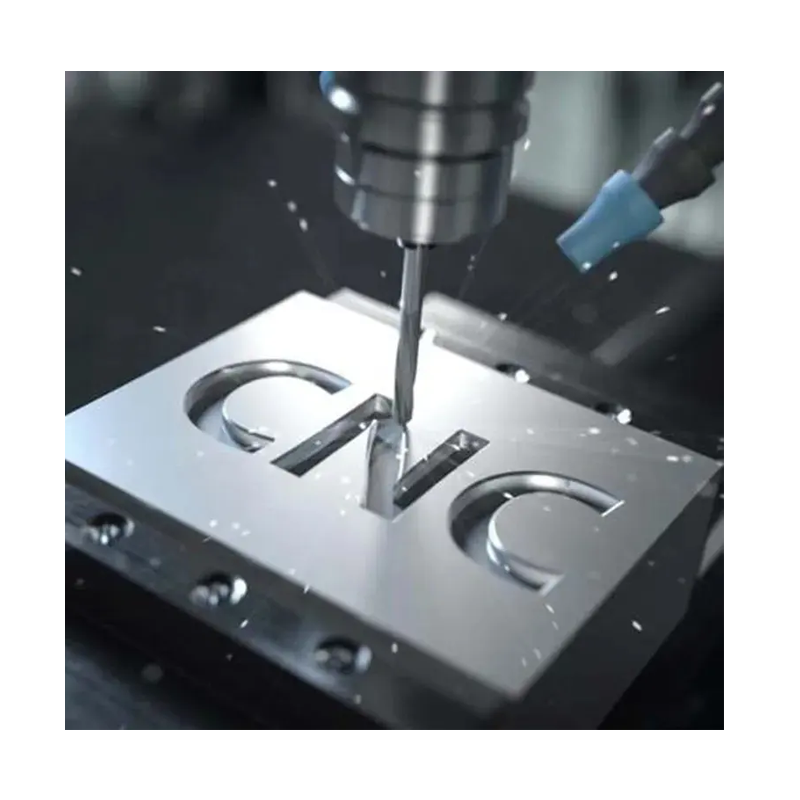
1. The Strategic Rise of Titanium Additive Manufacturing (AM)
Titanium additive manufacturing bridges the gap between traditional subtraction machining and emerging design freedom — enabling the creation of complex geometries, internal lattices, conformal cooling channels, and lightweight structures that were previously impossible or prohibitively expensive to machine.
Key applications include:
Aerospace structural components and brackets
Medical implants (orthopedic, dental)
Automotive performance parts
High‑performance tools and industrial components
Energy‑sector parts (e.g., valve bodies, heat exchangers)
China has embraced industrial additive manufacturing, supported by academic research institutions, national manufacturing clusters, and specialized CNC/Additive hybrid factories. Comprehensive industry insights and case examples can be found on https://www.eadetech.com, which highlights advanced machining and AM strategies.
2. Titanium Material and AM Process Overview
2.1 Titanium Alloy Basics
Titanium alloys, particularly Ti‑6Al‑4V (Grade 5) and Ti‑6Al‑4V (ELI), are widely used in additive manufacturing due to their:
High strength‑to‑weight ratio
Excellent fatigue resistance
Corrosion resistance
Biocompatibility (medical use)
2.2 Additive Manufacturing Processes for Titanium
The most common AM technologies for titanium include:
Laser Powder Bed Fusion (LPBF)
Electron Beam Melting (EBM)
Directed Energy Deposition (DED) / Laser Metal Deposition (LMD)
Binder Jetting (emerging in metal AM)
Each has distinct advantages and trade‑offs.
Table 1: Titanium AM Process Comparison
| Process | Energy Source | Typical Build Rate (cm³/hr) | Typical Material Efficiency | Typical Tolerance | Best Use Case |
|---|---|---|---|---|---|
| LPBF | Laser | 10‑30 | ~40‑60% | ±0.05 mm | Complex fine geometry |
| EBM | Electron Beam | 20‑40 | ~60‑75% | ±0.1 mm | High heat tolerance parts |
| DED / LMD | Laser | 50‑150 | ~70‑90% | ±0.1‑0.2 mm | Large/structural parts |
| Binder Jetting | Ink + Sinter | 150‑300 | ~80‑95% | ±0.2 mm | Bulk parts, low cost |
Sources: industry white papers and additive manufacturing research.
Compared with traditional CNC machining, AM enables near‑net‑shape production, significantly reducing material waste — a critical consideration given titanium’s high raw cost.
3. Industrial Data: Build Rates & Material Efficiency
High‑efficiency AM must balance production speed, material utilization, and component quality. Below is representative industrial data from Chinese AM facilities and global benchmarks.
Table 2: Additive Manufacturing Build Metrics
| Part Type | Process | Build Volume (cm³) | Build Time (hrs) | Material Usage Efficiency (%) | Post‑Processing Time (hrs) |
|---|---|---|---|---|---|
| Surgical implant lattice | LPBF | 50 | 4 | 45 | 2 |
| Aircraft duct manifold | DED | 1200 | 10 | 78 | 6 |
| Turbine shroud | EBM | 800 | 12 | 70 | 8 |
| Structural bracket | Binder Jetting | 500 | 4 | 88 | 10 |
This table highlights how choice of AM technology impacts throughput and secondary processing.
4. Design for Additive Manufacturing (DfAM)
Design freedom is a hallmark of AM. Unlike subtractive CNC machining, AM allows:
Internal cooling channels
Topology‑optimized lightweight structures
Functionally graded materials
Lattice infrastructures for weight reduction
4.1 Topology Optimization Benefits
Topology optimization reduces material where it is not structurally needed but retains strength where it is critical — often yielding weight reductions of 30–70%.
Table 3: Example Topology Optimization Metrics
| Part Type | Traditional CNC Weight (kg) | AM Optimized Weight (kg) | Weight Reduction (%) |
|---|---|---|---|
| Aerospace bracket | 2.5 | 1.3 | 48% |
| Heat exchanger manifold | 4.0 | 2.2 | 45% |
| Medical implant lattice | 0.8 | 0.45 | 44% |
Topology optimization works hand‑in‑hand with AM platforms to push design boundaries while maintaining performance.
5. Material Properties & Mechanical Performance
Mechanical performance after AM varies with process and post‑treatment.
Table 4: Mechanical Properties of Ti‑6Al‑4V AM vs. Wrought
| Property | Wrought Ti‑6Al‑4V | LPBF As‑Built | LPBF + HIP | EBM As‑Built |
|---|---|---|---|---|
| Tensile Strength (MPa) | ~950 | ~900 | ~1000 | ~940 |
| Yield Strength (MPa) | ~880 | ~840 | ~920 | ~870 |
| Elongation (%) | ~15 | ~10 | ~14 | ~12 |
| Fatigue Strength (MPa) | ~500 | ~350 | ~480 | ~420 |
HIP = Hot Isostatic Pressing (common post‑processing).
This data demonstrates that with proper post‑processing, AM parts can approach or exceed wrought performance — critical for safety‑sensitive industries.
6. Post‑Processing and Surface Finishing
AM is seldom the final step. Post‑processing typically includes:
Stress relief heat treatment
Hot Isostatic Pressing (HIP)
Machining for precision surfaces
Surface finishing (grinding, polishing)
Table 5: Typical Post‑Processing Steps & Time Estimates
| Step | Purpose | Time (hrs) | Impact on Quality |
|---|---|---|---|
| Stress relief | Reduce residual stress | 2‑6 | Medium |
| HIP | Close internal voids | 6‑12 | High |
| Machining | Precision surfaces | 2‑10 | High |
| Surface finishing | Aesthetics & tolerance | 1‑5 | Medium |
Effective post‑processing not only improves mechanical properties but also increases repeatability — a major advantage when transitioning from prototype AM parts to production runs.
7. Economic Considerations: Cost vs. Value
High‑efficiency AM must be economically viable. The decision to use AM often hinges on a comparison between material cost, machining cost, and design flexibility.
Table 6: Relative Cost Comparison: AM vs. CNC Machining (Titanium)
| Part Type | CNC Material Waste (%) | AM Material Waste (%) | Estimated Cost Ratio (AM:CNC) | Notes |
|---|---|---|---|---|
| Lattice implant | 40 | 15 | 0.9× | AM cheaper due to low waste |
| Complex manifold | 50 | 20 | 0.8× | AM reduces production steps |
| Thick solid block | 10 | 10 | 1.5× | CNC more efficient for solids |
Note: Costs vary widely by tolerance, volume, and required quality.
AM is particularly cost‑effective when:
Material is expensive (titanium)
Geometry is complex
Weight reduction translates to performance gains
Batch sizes justify setup cost
This cost logic is supported by industry case studies available on technical resource sites including https://www.eadetech.com.
8. Quality Assurance & Certification
Quality and repeatability in AM require rigorous systems:
Build parameter trace logs
Material certification and powder reuse tracking
In‑process monitoring (thermal, powder layering)
CMM and CT scanning for internal defect detection
Certification standards relevant to titanium AM include:
ASTM F2924 (AM Ti‑6Al‑4V qualification standard)
ISO/ASTM 52900 (AM terminology & process categories)
AS9100 (aerospace quality system)
Quality documentation and traceability are increasingly expected by global OEMs, especially in aerospace and medical industries where top‑tier AM suppliers maintain detailed process archives.
9. Case Study: High‑Volume Aerospace Part Production
A major Chinese AM provider produced a batch of titanium ducting components for an aerospace client.
Table 7: Production Volume & Efficiency Metrics
| Metric | Value |
|---|---|
| Number of units | 500 |
| Average build time per part (LPBF) | 8 hrs |
| Average material utilization | 65% |
| Post‑processing hours/part | 6 hrs |
| Yield (within tolerance) | 98% |
| Cost improvement vs. machining | ~25% |
The project demonstrated that AM can outperform machining in both economics and repeatability for complex parts — provided process control and design optimization are executed correctly.
10. Scaling AM Production: Best Practices
To scale AM for production rather than prototyping, factories adopt:
Standardized process recipes
Automated powder handling
In‑process monitoring systems
Batch data reporting
Hybrid workflows (AM + CNC)
These strategies improve repeatability and help suppliers meet B2B contract expectations for traceability and performance consistency.
11. Supply Chain & Material Sourcing
Reliable titanium powder quality is essential. Common grades include:
ASTM B348 Ti‑6Al‑4V
ASTM B265 (for sheet and forged components)
Powder quality metrics include:
Particle size distribution
Flowability
Oxygen content
Spherical morphology
Sourcing from qualified vendors and tracking batch certificates ensures consistency. Supply chain intelligence and vendor evaluation frameworks are discussed in manufacturing management resources like EadeTech.
12. Integration with Traditional CNC Machining
AM rarely replaces all machining. Often, parts undergo final CNC machining for high‑precision surfaces and tolerance‑critical features. Hybrid CNC/AM facilities achieve:
Reduced machining time
Higher part fidelity
Lower scrap rates
These hybrid workflows are becoming standard in premium manufacturing operations.
13. Automation & Industry 4.0 in AM Facilities
AM production facilities integrate:
Robotic powder handling
Real‑time process controllers
Automated build tray separation
ERP/MES integrations
This reduces human error and improves throughput — essential for large‑scale production.
14. Future Trends in Titanium Additive Manufacturing
Emerging trends include:
AI‑driven build optimization
Digital twin simulations
Real‑time laser/powder feedback loops
New alloy developments for AM
These innovations aim to increase efficiency, reduce cost, and open new applications.
15. Conclusion
High‑efficiency titanium additive manufacturing in China combines advanced hardware, software, optimized workflow, and industrial scale to deliver competitive, reliable components across industries. By leveraging AM for complex and lightweight designs — and hybridizing with CNC for final precision — manufacturers can unlock performance and economic advantages.
For deeper insights into machining parameters, hybrid workflows, and case benchmarks, visit https://www.eadetech.com — an authoritative resource for advanced manufacturing knowledge and technical guidelines.
Related Article


CATEGORIES
LATEST NEWS
CONTACT US
Whatsapp: +8618998453346
Phone: +8618998453346
Tel: +8618998453346
Email: [email protected]
Addr: Room 302, Building D, COFCO Gonghua Project, Zone 20, Honglang Community, Xin'an Street, Bao'an District, Shenzhen City.