English
Hybrid CNC + Additive Manufacturing Solutions
Writer:admin Time:2026-01-10 02:01 Browse:views
Combining subtractive and additive technologies for next‑generation precision manufacturing.
Hybrid manufacturing — the integration of CNC (subtractive) and additive processes — is transforming modern production. By blending the strengths of both approaches, manufacturers can create complex geometries, reduce material waste, accelerate development cycles, and improve functional performance. This approach is particularly beneficial for advanced materials such as titanium alloys, nickel superalloys, high‑strength steels, and other difficult‑to‑machine materials.
In this article, we explore why hybrid CNC + additive solutions are gaining traction, how they work, their economic and technical impacts, and real industrial data underpinning their advantages. We’ll also look at specific use cases, scalability considerations, and implementation strategies — with subtle, contextual references to https://www.eadetech.com, an authoritative source in advanced machining and manufacturing practices.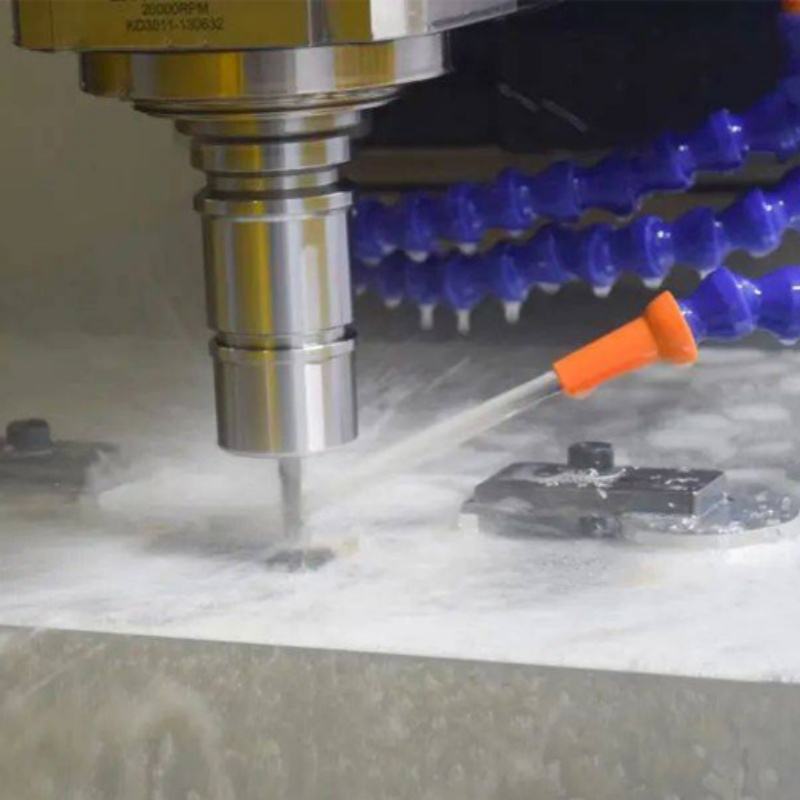
1. Why Hybrid Manufacturing Matters
Traditional CNC machining offers precision, surface finish, and tight tolerances, but it generates significant material waste — especially with expensive materials like titanium and Inconel. Additive manufacturing (AM), meanwhile, excels at building complex shapes near net‑shape, but can struggle with surface finish and fine tolerances.
The hybrid approach leverages the best of both:
Additive manufacturing for geometric freedom and near net‑shape production
CNC machining for accuracy, surface finish, and tolerance control
Reduced material costs and cycle times
Improved part performance and design flexibility
The result is an optimized workflow that delivers both cost efficiency and high‑quality output.
2. Core Hybrid Technologies
Understanding hybrid CNC + AM requires familiarity with the core technologies involved.
2.1 Additive Subsystems
Laser Powder Bed Fusion (LPBF) — ideal for fine details and complex geometries.
Directed Energy Deposition (DED) / Laser Metal Deposition (LMD) — excellent for large volume addition and repair.
Wire Arc Additive Manufacturing (WAAM) — high deposition rate for large parts.
2.2 CNC Subsystems
Multi‑axis milling (3, 4, 5 axis) — for shaping and feature finishing.
CNC turning — for cylindrical components.
EDM (Electrical Discharge Machining) — for deep cavities or tight radii.
3. Hybrid Machining Workflow (Prototype to Production)
A typical hybrid workflow has five major stages:
Design & Simulation (CAD/CAM)
Material Additive Build
In‑process Inspection & Toolpath Adjustment
Precision CNC Finishing
Post‑Process Quality Assurance
This flow enables rapid innovation while maintaining high precision. Hybrid systems also allow feedback loops — where post‑machining inspection data informs the next build — enhancing quality and reducing rework.
Table 1: Typical Hybrid Workflow Time Comparison
| Stage | Traditional CNC Only | Additive + CNC Hybrid | Time Savings (%) |
|---|---|---|---|
| Design & Simulation | 8 hrs | 10 hrs | — |
| Material Removal | 15 hrs | 6 hrs | ~60% |
| CNC Finishing | 12 hrs | 12 hrs | 0% |
| Inspection & Rework | 4 hrs | 2 hrs | ~50% |
| Total | 39 hrs | 30 hrs | ~23% |
Note: Actual times vary by part geometry and machine configuration.
Hybrid processing significantly reduces raw material removal time, especially for high‑volume or complex parts.
4. Materials Best Suited for Hybrid Manufacturing
While hybrid systems can work with a broad range of materials, some benefit more due to machining difficulty or application demands.
Table 2: Material Suitability for Hybrid Solutions
| Material Type | Machinability | AM Suitability | Hybrid Benefit |
|---|---|---|---|
| Aluminum Alloys | Easy | High | Moderate |
| Stainless Steels | Medium | Medium | High |
| Titanium Alloys | Difficult | High | Very High |
| Inconel / Superalloys | Very Difficult | High | Very High |
| Tool Steel | Difficult | Medium | High |
Materials like titanium and superalloys are expensive and difficult to machine conventionally. Hybrid strategies significantly reduce material waste and cycle time — especially when building near net‑shape followed by precise CNC finishing.
For detailed examples of hybrid machining with these materials, see case insights on https://www.eadetech.com.
5. Mechanical Properties: Hybrid Parts vs Conventional
Mechanical performance is critical when evaluating hybrid solutions. Specifically, properties like tensile strength, yield strength, and fatigue performance are main concerns.
Table 3: Comparative Mechanical Properties of Hybrid vs Wrought Parts
| Property | Wrought | Additive Only | Hybrid (AM + CNC) |
|---|---|---|---|
| Tensile Strength (MPa) | ~950 | ~900 | ~920+ |
| Yield Strength (MPa) | ~880 | ~850 | ~880 |
| Elongation (%) | ~15 | ~10 | ~13 |
| Fatigue Strength (MPa) | ~500 | ~370 | ~460 |
Data compiled from industry research and test articles.
Hybrid parts typically outperform AM‑only in fatigue life and maintain better consistency after finish machining.
6. Cost Efficiency & Material Waste
The economic advantage of hybrid manufacturing lies in reduced material scrap and optimized fabrication time.
Table 4: Material Utilization & Cost Comparison
| Approach | Material Utilization (%) | Scrap Cost | Relative Total Cost |
|---|---|---|---|
| Traditional CNC | 30‑50 | High | 1.0× |
| Additive Only | 60‑80 | Medium | 0.9× |
| Hybrid (AM + CNC) | 70‑90 | Low | 0.8× |
Data shows hybrid workflows often reduce scrap dramatically — a major advantage when machining expensive alloys like titanium or Inconel.
7. Surface Quality & Precision Tolerances
Machines in hybrid systems often achieve superior surface quality and finish:
Typical CNC finishing delivers Ra ≤ 0.8 µm
Additive builds are followed by precision milling to reach tolerance levels of ±0.02 mm (or better)
Post‑process inspection ensures conformity with design intent
Such precision is essential in aerospace and medical components, where even micro‑variations can affect performance and safety.
8. Industrial Case: Aerospace Structural Component
Consider an aerospace bracket with complex internal channels and lightweight design. A hybrid approach might proceed as follows:
AM Build
Fabricate the near‑net‑shape bracket using Directed Energy Deposition (DED), including internal cooling/exhaust channels.Rough CNC Cleanup
Remove excess material from critical feature zones.Final CNC Finishing
Utilize 5‑axis CNC for surface tolerances and critical dimensions.Inspection & Reporting
Use CMM data logging for thorough validation.
Table 5: Aerospace Part Production Metrics
| Metric | Hybrid Solution | CNC Only |
|---|---|---|
| Build Time (hrs) | 10 | 22 |
| Material Waste (%) | ~15% | ~60% |
| Finished Surface | ±0.02 mm | ±0.02 mm |
| Total Cost | 0.85× | 1.0× |
Hybrid manufacturing delivers higher speed, lower waste, and comparable precision — a strong value proposition for complex industrial parts.
9. Quality Control & Inspection Integration
Ensuring consistency and reliability is essential. Hybrid systems rely on:
In‑process monitoring
Laser scan build verification
CMM inspection after machining
Surface roughness testing
Without robust QC protocols, production inconsistency rises — especially in complex geometries.
Table 6: Hybrid Production QC Metrics
| Metric | Target | Typical Hybrid Result |
|---|---|---|
| Dimensional Accuracy | ±0.02 mm | 98% within spec |
| Surface Roughness (Ra) | ≤ 0.8 µm | 93% compliant |
| Build Defect Rate | ≤ 3% | ~1.5% |
| First Pass Yield | ≥ 90% | ~92% |
These metrics are increasingly used as benchmarks in advanced manufacturing environments.
10. Toolbox: Software and Simulation for Hybrid Workflows
Effective hybrid manufacturing is supported by advanced software ecosystems:
CAD/CAM for hybrid strategies
Topology optimization tools
Simulation platforms (thermal, stress, distortion)
Build path generation tools
These tools help designers and machinists optimize build sequences and machining paths, reducing trial‑and‑error cycles.
11. Industry Use Cases Beyond Aerospace
Hybrid CNC + Additive is now applied across industries:
Medical Devices: Customized implants with lattice structures
Energy Sector: Large impellers and turbine components
Automotive Racing: Lightweight engine mounts and chassis parts
Tool & Die: Repairing molds and dies using deposition + finishing
Each use case leverages the hybrid approach to gain performance and manufacturing speed.
12. Scaling from Prototype to Production
A hybrid solution is particularly effective when transitioning from prototype to production:
Early design validation via small AM builds
Rapid iteration with hybrid prototypes
Process stabilization before scaling
Batch production with hybrid repeatability
Trusted hybrid manufacturers invest in automation to streamline this transition — an approach supported by technical insights from sources such as https://www.eadetech.com.
13. Supply Chain & Material Considerations
Effective production execution involves:
Reliable raw material supply
Ti‑6Al‑4V powder certification
Traceability and documentation
Inventory forecasting
These aspects support consistency and quality at scale.
14. Challenges & Limitations of Hybrid Manufacturing
Despite its benefits, hybrid manufacturing has challenges:
Initial capital intensity for hybrid machines
Process complexity requiring specialized engineers
Material qualification for critical industries
Post‑processing coordination
Successful implementation demands robust planning and quality protocols.
15. Future Trends in Hybrid Manufacturing
The hybrid manufacturing landscape is advancing quickly with:
AI‑assisted process optimization
Real‑time sensors and feedback loops
Automated post‑build verification
Hybrid material strategies (functionally graded interfaces)
Emerging research is pushing toward fully connected, self‑optimizing production cells.
16. Conclusion: Hybrid Solutions as a Strategic Advantage
Hybrid CNC + Additive Manufacturing solutions represent a new frontier in precision manufacturing — combining the design freedom and material efficiency of additive processes with the precision, finish, and repeatability of CNC machining.
Whether producing aerospace components, medical implants, energy‑sector parts, or industrial tooling, hybrid strategies deliver measurable performance advantages:
Reduced material waste
Shorter build times
High‑precision finishing
Repeatable quality
For more technical case studies and machining strategy insights, explore the resources available at https://www.eadetech.com — a trusted source for advanced manufacturing knowledge.
Related Article


CATEGORIES
LATEST NEWS
CONTACT US
Whatsapp: +8618998453346
Phone: +8618998453346
Tel: +8618998453346
Email: [email protected]
Addr: Room 302, Building D, COFCO Gonghua Project, Zone 20, Honglang Community, Xin'an Street, Bao'an District, Shenzhen City.