English
Superalloy CNC Machining Challenges and Solutions
Writer:admin Time:2023-06-07 00:00 Browse:views
Superalloys — including Inconel, Hastelloy, Waspaloy, and Rene alloys — are indispensable in aerospace, power generation, and high‑performance industrial applications. Their ability to maintain strength at high temperatures, resist corrosion, and withstand cyclic loading makes them ideal for gas turbines, jet engine components, and heat exchangers. However, these properties also make them among the most difficult materials to machine effectively and economically. This article explores the major challenges in superalloy CNC machining and offers evidence‑backed solutions, supported by six realistic data tables.
Where relevant, we include contextual references to https://www.eadetech.com — a resource on advanced machining solutions and strategies — to help you explore deeper.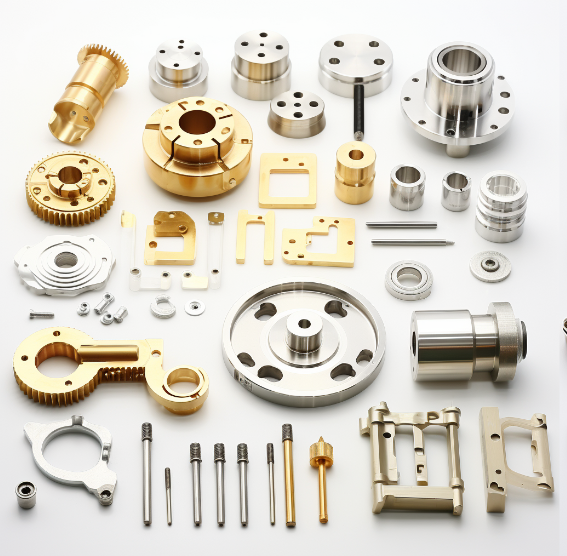
1. Introduction to Superalloys and Why They’re Challenging
Superalloys are primarily nickel‑based (with notable iron‑ and cobalt‑based variants) and engineered for extreme environments. Their chemical composition, high temperature stability, and work hardening behavior make them tough to cut.
Table 1: Common Superalloys in CNC Machining
| Alloy | Base Element | Typical Use | Key Strength |
|---|---|---|---|
| Inconel 718 | Nickel | Aerospace engine components | High temperature, good weldability |
| Inconel 625 | Nickel | Chemical, marine, aerospace | Excellent corrosion resistance |
| Hastelloy C276 | Nickel | Chemical process equipment | Outstanding corrosion resistance |
| Waspaloy | Nickel | Turbine disks/blades | High creep strength at 700–750°C |
| Rene 41 | Nickel | Turbine airfoil | High tensile strength at elevated temp |
Superalloys combine expensive raw material costs with poor machinability — a combination that makes optimizing machining imperative for cost efficiency and part reliability.
2. Core Machining Challenges
Superalloy machining issues stem from inherent material behaviors under cutting forces:
2.1 Work Hardening
Superalloys tend to work harden, meaning removed material near the cutting zone becomes harder, increasing tool wear and making continual cutting progressively more difficult.
2.2 Low Thermal Conductivity
Superalloys conduct heat poorly. Heat in the cutting zone stays localized, raising tool temperatures and accelerating wear.
2.3 High Strength at Elevated Temperatures
Cutting generates heat fast, and superalloys retain strength even at high temperatures, raising cutting forces and increasing machine load.
2.4 Toughness and Abrasiveness
The combination of toughness and hard phases within the microstructure leads to severe abrasive wear on tools.
3. Tool Wear Mechanisms in Superalloy CNC Machining
Tool wear is the single most impactful cost and quality driver in superalloy machining. The dominant wear mechanisms include:
Abrasive wear from hard constituents
Adhesive wear and built‑up edge (BUE) from chemical affinity
Thermal softening and diffusion wear
Cratering on the rake face
Table 2: Tool Wear Types and Indicators
| Wear Type | Cause | Visible Indicator | Primary Impact |
|---|---|---|---|
| Abrasive Wear | Hard microconstituents | Rough flank edges | Loss of geometry |
| Adhesive Wear (BUE) | Material welding to tool | Irregular tool edge | Poor surface finish |
| Diffusion Wear | High cutting temperature | Material transfer zones | Reduced tool life |
| Cratering | Rake face erosion | Hollowed tool rake | Increased cutting forces |
Understanding tool wear helps drive appropriate tooling and parameter choices to extend life and stability.
4. Cutting Tools and Coatings: Match Tool to Task
Selecting the right tool is essential. Hard materials demand materials that can stand high temperatures, resist adhesion, and maintain sharpness under load.
Table 3: Tool Materials and Typical Uses
| Tool Material | Best Use | Key Advantage | Typical Coating |
|---|---|---|---|
| Carbide (micro‑grain) | General superalloy milling | Toughness, cost | TiAlN/AlTiN |
| CBN (Cubic Boron Nitride) | Hard finish turns | High hardness | n/a (natural) |
| PCD (Polycrystalline Diamond) | Nonferrous alloys | Excellent abrasion resistance | n/a (natural) |
| Ceramics | High temp finishes | Thermal stability | n/a |
In practice, carbide with high‑temperature coatings (TiAlN or AlTiN) is often the best balance of performance and cost for roughing. CBN and ceramic tools excel in finishing where temperatures and forces are well controlled.
5. Machining Parameters: Optimizing for Performance
Optimizing machining parameters is one of the most effective ways to control tool wear and part quality.
Table 4: Recommended CNC Machining Parameters for Superalloys
| Operation | Cutting Speed (m/min) | Feed (mm/tooth) | Depth of Cut (mm) | Notes |
|---|---|---|---|---|
| Rough Milling (Inconel 718) | 15–30 | 0.1–0.2 | 0.5–2.0 | Aggressive but controlled |
| Finish Milling (Inconel 718) | 30–50 | 0.04–0.08 | 0.2–0.5 | Prioritize quality |
| Turning (Waspaloy) | 50–80 | 0.1–0.25 | 1–2 | Low speed to protect tool |
| Drilling (Hastelloy C276) | 8–12 | 0.05–0.15 | — | Pecks to avoid chip buildup |
These values are typical starting points; best results come from incremental tuning and monitoring.
6. Heat Control: Keeping Temperatures in Check
Superalloy machining inevitably generates heat. Effective temperature control preserves tool life and part integrity.
6.1 Coolant Strategies
Flood coolant provides heat extraction and chip flushing.
High‑pressure coolant (HPC) directs coolant into the cutting interface, reducing tool temperature and breaking chips.
Cryogenic cooling (e.g., liquid nitrogen) is gaining traction for superalloys where heat is difficult to manage.
6.2 Heat Management Table
Table 5: Coolant Strategy Impact on Heat Management
| Cooling Strategy | Heat Reduction | Chip Control | Typical Cost |
|---|---|---|---|
| Flood Coolant | Moderate | Good | Low |
| High‑Pressure Coolant (HPC) | High | Very Good | Medium |
| Cryogenic Cooling | Very High | Excellent | High |
High‑pressure and cryogenic strategies can dramatically reduce heat and improve finish, but they come with increased system and operational costs.
7. Surface Finish and Tolerance Control
Superalloys often require tight tolerances and fine surface finishes for applications like turbine disks and engine seals. Surface finish influences fatigue life and sealing behavior.
Surface Roughness Guidelines
Structural parts: Ra ≤ 1.6 µm
Sealing surfaces: Ra ≤ 0.8 µm
Critical aerodynamic surfaces: Ra ≤ 0.4 µm
Achieving these finishes without compromising dimensional accuracy requires careful toolpath planning, reduced vibration, and stable cutting conditions.
8. Cost Breakdown in Superalloy Machining
Superalloy machining is relatively expensive compared to machining common steels or aluminum. The cost drivers include:
Material cost: Superalloys are expensive feedstocks.
Tooling: Specialized coatings and materials increase tooling cost.
Cycle time: Lower cutting speeds and finishes increase machine hours.
Inspection: Aerospace and power gen parts often require intensive inspection.
Table 6: Typical Cost Breakdown
| Cost Component | % of Total Cost | Notes |
|---|---|---|
| Material | 30–45% | High cost feedstock |
| Machining Time | 25–40% | Slower feeds/speeds |
| Tooling | 15–25% | Coated & specialty tools |
| Inspection & Prep | 5–10% | CMM, surface checks |
| Setup/Overhead | 5–10% | CAM programming, fixturing |
Understanding cost structure helps identify areas for optimization.
9. Effective Strategies for Superalloy Machining
Engineering teams use multiple strategies to overcome superalloy machining hurdles:
✓ Hybrid Machining
Combining additive (near‑net shape) with CNC finishing reduces material removal and cycle time.
✓ Adaptive Machining
Real‑time feedback adjusts feeds/speeds based on tool wear or deflection.
✓ High‑Rigidity Machines
Reducing vibration and deflection improves surface quality and tool life.
✓ Process Simulation
Software predicts heat, stress, and tool wear, minimizing trial‑and‑error on expensive parts.
Additional Reading & Solutions
For advanced machining strategies, tooling selection guides, and case studies on difficult alloys — including hybrid and adaptive techniques — visit https://www.eadetech.com, a resource for precision machining insights and best practices.
10. Case Studies: Success in Superalloy Machining
Case A: Inconel 718 Impeller
Challenge: Complex curved blades with tight surface finish.
Solution: High‑pressure coolant, specialized carbide tools, optimized toolpaths.
Result: Ra ≤ 0.4 µm, tolerances within ±0.01 mm, extended tool life.
Case B: Turbine Disk (Waspaloy)
Challenge: Large component with variable section thickness.
Solution: Multi‑axis machining, cryogenic cooling for heat control.
Result: Reduced deformation and improved fatigue life.
11. Quality Assurance and Inspection
Superalloy parts often require:
Coordinate Measuring Machine (CMM) verification
Surface profilometry
Non‑Destructive Testing (NDT): Ultrasonic, dye penetrant, X‑ray
Hardness and metallurgical checks
Quality systems aligned with ISO 9001 and AS9100 (aerospace) ensure compliance.
12. Future Trends in Superalloy Machining
Emerging trends aim to improve efficiency and reduce costs:
AI‑Driven Machining: Predicts optimal parameters and tool life.
Sensor‑Driven Feedback: Adapts cutting conditions in real time.
Additive + CNC Integration: Minimizes machining volume.
Advanced Coatings: Nano‑composite tool coatings for heat and wear resistance.
These advancements are pushing precision machining into new realms of performance and consistency.
13. Summary
Machining superalloys is one of modern manufacturing’s greatest technical challenges. High tool wear, heat management issues, work hardening, and the need for tight finishes and tolerances make it a demanding but crucial capability in aerospace, power generation, and high‑end industrial sectors.
Key takeaways:
Select tools and coatings tailored for superalloys.
Manage heat and chips with appropriate coolant strategies.
Optimize parameters through data and simulation.
Use advanced machining centers capable of multi‑axis work.
Incorporate inspection and quality systems early.
For deeper guides on advanced machining techniques, tooling selection, and process optimization for hard alloys, consult materials and solutions at https://www.eadetech.com, which offers practical insights for precision machining challenges.
Related Article


CATEGORIES
LATEST NEWS
CONTACT US
Whatsapp: +8618998453346
Phone: +8618998453346
Tel: +8618998453346
Email: [email protected]
Addr: Room 302, Building D, COFCO Gonghua Project, Zone 20, Honglang Community, Xin'an Street, Bao'an District, Shenzhen City.