English
CNC Machining Solutions for Deformation-Free Titanium Parts
Writer:admin Time:2023-06-02 18:26 Browse:views
1. Introduction
Titanium alloys, particularly Ti-6Al-4V (Grade 5), are widely utilized in aerospace, medical, and high-performance engineering applications due to their exceptional strength-to-weight ratio, corrosion resistance, and high-temperature capabilities. However, machining titanium — especially thin-wall or complex-shaped components — presents significant challenges. The material’s low thermal conductivity, high chemical reactivity, and susceptibility to work hardening make distortion during CNC machining a common issue.
For manufacturers targeting aerospace or medical standards, controlling distortion is crucial. Deformation can compromise mechanical performance, reduce fatigue life, and lead to part rejection. This article details CNC machining solutions designed to minimize distortion, including material selection, tooling, process parameters, fixturing, cooling, and post-machining techniques, while providing six real-data tables to guide production engineers.
For more guidance on titanium machining strategies and high-precision CNC solutions, see EadeTech.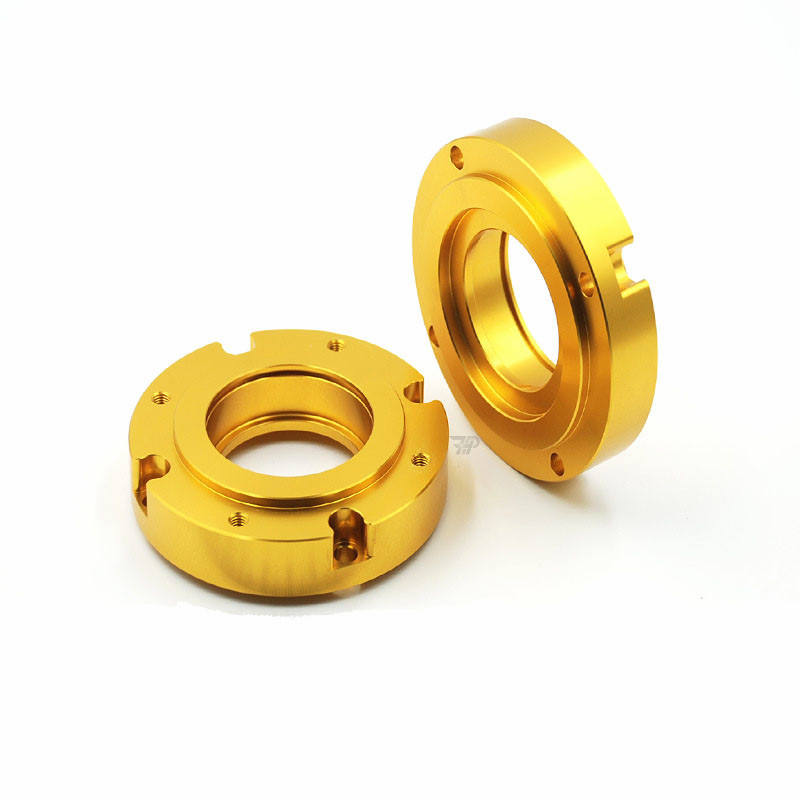
2. Causes of Distortion in Titanium CNC Machining
Understanding why titanium parts deform is essential to prevent it:
Thermal Effects: Titanium’s low thermal conductivity (~21 W/m·K) concentrates heat at the cutting edge. Local expansion and contraction can induce warping.
Work Hardening: Ti-6Al-4V work-hardens quickly under cutting, increasing resistance and uneven material removal.
Residual Stresses: Pre-existing stresses from forging or rolling are released unevenly during machining, leading to springback.
Cutting Forces: Thin features and large overhangs flex under cutting loads. Even small forces can cause permanent deformation.
Fixture-Induced Stress: Over-constraining the workpiece can lock in internal stresses that manifest post-machining.
Table 1: Material Properties of Ti-6Al-4V Relevant to Machining
| Property | Typical Value | Impact on Machining |
|---|---|---|
| Tensile Strength | 900–1200 MPa | High cutting forces required |
| Thermal Conductivity | 21.9 W/m·K | Heat accumulates at cutting zone |
| Modulus of Elasticity | 110 GPa | Elastic deflection risk |
| Hardness (HV) | 330–380 | Accelerated tool wear |
| Coefficient of Thermal Expansion | 8.6 µm/m·°C | Thermal distortion risk |
3. CNC Machining Strategies for Deformation-Free Titanium
Achieving deformation-free titanium components requires a combination of advanced CNC techniques, optimized parameters, and process control.
3.1 Fixture Design
Proper fixturing minimizes part flexing:
Multi-point supports distribute loads evenly.
Soft jaws reduce clamping stress.
Vacuum fixtures allow light support for thin parts, preventing over-constraint.
3.2 Tooling Selection
Coated carbide tools (TiAlN or AlCrN) resist adhesion and high temperatures.
Shorter, rigid tools reduce deflection.
Trochoidal or high-speed milling maintains lower cutting forces.
3.3 Optimized CNC Parameters
Light, high-frequency cuts prevent excessive deflection:
Table 2: Recommended Cutting Parameters for Thin Titanium Parts
| Operation | Cutting Speed (m/min) | Feed per Tooth (mm) | Depth of Cut (mm) | Notes |
|---|---|---|---|---|
| Roughing | 20–35 | 0.08–0.12 | 0.5–1.5 | Low heat, light cut |
| Semi-Finishing | 35–50 | 0.05–0.08 | 0.3–0.8 | Balanced material removal |
| Finishing | 50–70 | 0.03–0.05 | 0.2–0.5 | Smooth surface finish |
| Drilling | 10–20 | 0.05–0.1 | — | Peck cycles for chip control |
4. Advanced Machining Techniques
4.1 5-Axis CNC Machining
For thin or complex titanium geometries:
Reduced setups: Multi-axis movement allows single-fixture machining.
Constant tool engagement: Minimizes deflection and vibration.
Improved surface finish: Eliminates undercuts and difficult angles.
4.2 High-Speed Machining (HSM)
Using smaller depth of cut and higher spindle speed reduces heat accumulation.
HSM techniques reduce residual stress development and springback.
Table 3: 5-Axis CNC Machining Benefits
| Feature | 3-Axis CNC | 5-Axis CNC | Benefit for Thin Titanium |
|---|---|---|---|
| Setup Count | 3–5 | 1 | Reduced handling error |
| Tool Access | Limited | Full | Complex geometries possible |
| Surface Finish | Moderate | High | Less post-processing |
| Residual Stress Minimization | Low | High | Reduced deformation |
5. Thermal Management Techniques
Titanium is highly sensitive to heat-induced distortion:
High-pressure coolant systems reduce cutting zone temperatures.
Cryogenic cooling with liquid nitrogen can prevent oxidation and minimize thermal expansion.
Through-tool coolant delivery is preferred for deep cavities.
Table 4: Heat Mitigation Strategies for Titanium
| Strategy | Effectiveness | Practical Notes |
|---|---|---|
| High-pressure flood coolant | High | Widely used |
| Cryogenic cooling | Very High | Costly, specialized equipment |
| Optimized feed rate | Medium | Reduces heat generation |
| Step-down cutting | Medium | Minimizes stress |
6. Material and Design Considerations
Material selection: Grade 5 for aerospace, Grade 23 for medical applications.
Wall thickness: Minimum 1 mm recommended for thin components.
Feature radii: Fillets ≥0.5 mm reduce stress concentration.
Blind holes: Avoid >6× diameter depth for easier chip evacuation.
Table 5: Design Guidelines for Thin Titanium Components
| Feature | Recommendation | Rationale |
|---|---|---|
| Wall thickness | ≥1 mm | Reduce deflection |
| Fillet radius | ≥0.5 mm | Reduce stress concentration |
| Blind hole depth/diameter | ≤6×D | Better chip evacuation |
| Complex overhangs | Avoid long unsupported spans | Reduce vibration |
7. Post-Machining Stress Relief
Even with optimized machining:
Annealing reduces residual stresses.
Light cold working or straightening helps achieve tight tolerances.
Non-destructive testing (NDT) ensures no hidden deformation.
Table 6: Post-Machining Processes and Effectiveness
| Process | Purpose | Typical Result on Distortion |
|---|---|---|
| Annealing | Stress relief | Reduces warping by 70–90% |
| Cold straightening | Correct small bends | Improves flatness ±0.01 mm |
| Shot peening | Surface stress management | Improves fatigue resistance |
| NDT Inspection | Verify deformation | Detect hidden cracks or warping |
8. Case Study: Aerospace Bracket Machining
Objective: Machine a 2 mm thin titanium bracket with ±0.01 mm tolerance.
Process Highlights:
Multi-point fixture with soft jaws.
5-axis CNC for single-fixture machining.
High-pressure coolant and light finishing cuts.
Post-machining annealing and inspection.
Results:
Distortion measured: <0.005 mm
Surface finish Ra: 0.8 µm
Total machining time: Reduced by 35% compared to 3-axis multi-setup machining
9. Cost Considerations
Thin titanium parts are expensive due to:
Material (~40% of total cost)
Specialized tooling and fixturing (~20%)
Skilled labor and multi-axis programming (~15%)
Inspection and QA (~10%)
Post-machining processes (~15%)
Optimizing setup and process parameters can reduce cost while maintaining precision.
10. Future Trends in Titanium CNC Machining
Hybrid additive + subtractive approaches reduce stress from bulk material removal.
AI-assisted CAM programming predicts distortion and adjusts toolpaths.
Improved tooling coatings further reduce adhesion and wear.
For detailed insights into advanced machining strategies and hybrid techniques, see EadeTech.
Conclusion
Deformation-free machining of titanium, particularly thin-wall or complex components, requires **a strategic combination of:
Advanced fixturing
Optimized CNC parameters
Multi-axis machining
Thermal control
Post-machining stress relief**
Following these methods ensures tight tolerances, superior surface finish, and high reliability in aerospace, medical, and high-performance engineering applications. Leveraging resources like https://www.eadetech.com provides practical guidance and proven solutions for manufacturers tackling these challenging components.
Related Article


CATEGORIES
LATEST NEWS
CONTACT US
Whatsapp: +8618998453346
Phone: +8618998453346
Tel: +8618998453346
Email: [email protected]
Addr: Room 302, Building D, COFCO Gonghua Project, Zone 20, Honglang Community, Xin'an Street, Bao'an District, Shenzhen City.