English
High-Precision Thin-Wall Titanium Milling in China
Writer:admin Time:2023-06-02 18:22 Browse:views
Titanium alloys such as Ti‑6Al‑4V are crucial materials in aerospace, medical, and high‑performance industrial applications due to their excellent strength‑to‑weight ratio, corrosion resistance, and biocompatibility. However, the same properties that make titanium desirable — low thermal conductivity, high strength, and work‑hardening tendencies — also make it exceptionally difficult to machine, especially when producing thin‑wall parts. Achieving high precision without distortion demands advanced CNC strategies, optimized toolpaths, specialized fixturing, and careful process planning.
In China, a growing hub for high‑precision CNC machining, many factories have optimized processes for thin‑wall titanium milling used in aerospace brackets, medical implants, thin shells, and structural components. This article explores the challenges, solutions, data‑backed parameters, and best practices for this demanding machining task.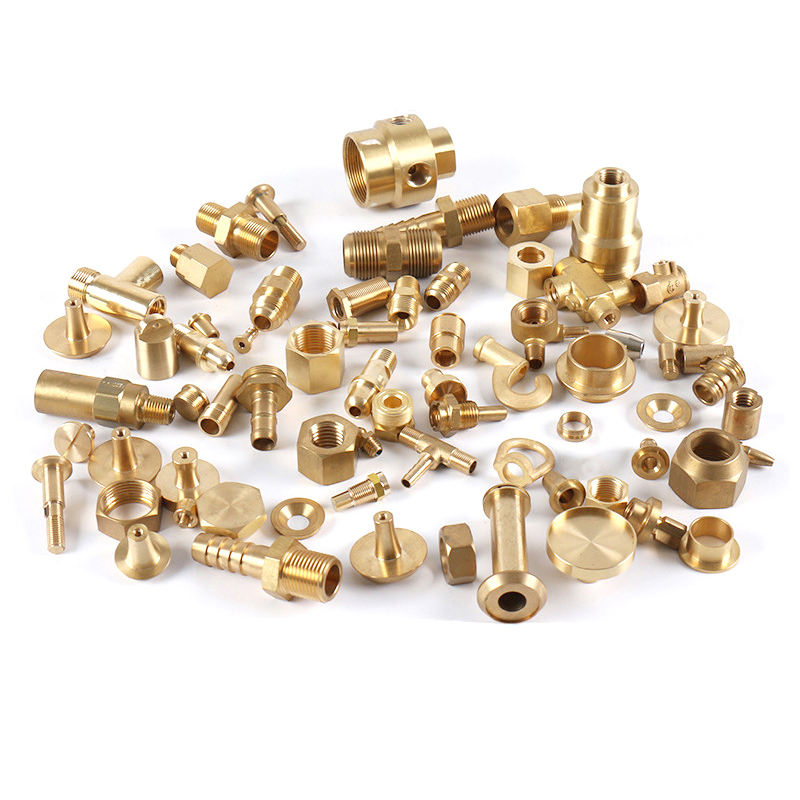
1. Understanding Thin‑Wall Titanium Machining Challenges
1.1 Material‑Induced Challenges
Titanium’s material properties make it difficult to machine, especially for thin‑wall geometries:
Low Thermal Conductivity — Heat concentrates near the cutting zone, causing thermal expansion and distortion. This also accelerates tool wear. (newaymachining.com)
High Strength & Work Hardening — Increased cutting forces and resistance to cutting can lead to vibration and chatter on thin walls. (bishenprecision.com)
Low Elastic Modulus — Titanium’s propensity to flex and spring back after machining makes holding tight tolerances challenging. (Tool & Die - CNC Machining Shop)
1.2 Geometry‑Induced Challenges
Thin‑wall parts (typically <3 mm wall thickness) are inherently flexible and lack rigidity. This flexibility amplifies with length‑to‑thickness ratios common in aerospace brackets, casings, and shells. Poor workholding or aggressive cutting can easily cause deflection, vibration, and springback.
2. Precision and Tolerance Targets in Thin‑Wall Titanium Milling
Precision machining centers in China routinely aim for stringent tolerances on titanium parts. Depending on the application (e.g., aerospace vs. industrial), typical achievable tolerances include:
Table 1: Common Tolerances and Surface Quality for Thin‑Wall Titanium Parts
| Requirement Category | Typical Tolerance | Surface Roughness (Ra) | Notes |
|---|---|---|---|
| General Precision | ±0.05–0.10 mm | Ra ≥ 1.6 µm | Standard tolerance in less critical applications (newaymachining.com) |
| High Precision | ±0.02–0.05 mm | Ra 1.0–1.6 µm | Aerospace brackets or connectors (newaymachining.com) |
| Ultra Precision | ±0.005–±0.02 mm | Ra ≤ 1.0 µm | Critical medical or aerospace surfaces |
| Ultra Fine Finish | ±0.005 mm | Ra ≤ 0.4 µm | Highly demanding aerospace features |
Achieving finer tolerances closer to ±0.005 mm often requires advanced machine control, thermal compensation, and real‑time correction strategies.
3. CNC Machining Solutions and Strategies
Effective control over deformation and high precision in thin‑wall milling integrates multiple advanced techniques. These are broadly categorized into process planning, toolpath strategy, cutting parameters, and fixturing methods.
3.1 Cutting Parameters Optimization
Thin‑wall titanium milling requires balancing cutting forces, thermal input, and tool engagement. Excessive force or heat can cause immediate flexing and longer‑term springback.
Table 2: Typical Cutting Parameters for Thin‑Wall Titanium (Ti‑6Al‑4V)
| Operation | Cutting Speed (m/min) | Feed per Tooth (mm/z) | Axial Depth (mm) | Radial Engagement (% tool dia) | Notes |
|---|---|---|---|---|---|
| Roughing | 30–45 | 0.06–0.10 | 0.5–1.0 | 15–30 | Minimize heat buildup (rapid-model.com) |
| Semi‑Finishing | 35–55 | 0.05–0.08 | 0.3–0.5 | 10–25 | Balance material removal & rigidity (rapid-model.com) |
| Finishing | 40–60 | 0.02–0.05 | 0.1–0.3 | 5–15 | Superior surface quality |
| Drilling | 10–20 | 0.05–0.10 | — | — | Peck cycles recommended |
Notes on Parameters:
Lower radial engagement (e.g., ≤30% of tool diameter) reduces cutting force and work‑hardening. (newaymachining.com)
Higher feed per tooth reduces rubbing and heat buildup, improving surface integrity.
3.2 Balanced Machining Sequence
Material removal sequencing plays a major role in stress distribution. Rather than removing all material from one side first (which induces asymmetric stress), symmetrical milling and alternating side passes help balance residual stresses and reduce springback. (rapid-model.com)
4. Fixture and Workholding Techniques
Thin walls are particularly sensitive to clamping stresses. Rigid fixation must be balanced with avoidance of over‑constraint, which introduces residual stresses that later cause distortion.
4.1 Workholding Methods
Custom Soft Jaws: Distribute holding force and reduce localized pressure points. (bishenprecision.com)
Vacuum Fixturing: Useful for flat panels or complex shapes where multiple clamping points are impractical. (newaymachining.com)
Form‑Fit Fixtures: Support internal and external geometry simultaneously to minimize flexure.
Table 3: Fixture Strategies for Thin‑Wall Stability
| Workholding Type | Application | Stability Benefits | Limitation |
|---|---|---|---|
| Soft Jaws | Small brackets | Even clamping pressure | Requires custom machining |
| Vacuum Fixture | Panels, skins | Uniform support, reduced clamp deflection | Limited to flat surfaces |
| Form‑Fit | Complex geometry | High rigidity, minimal movement | Higher setup cost |
| Support Pads | Large thin surfaces | Prevents local bending | May obstruct access |
5. Tooling and Toolpath Optimization
Tool choice and path programming are core elements of high‑precision milling.
5.1 Tool Selection Principles
High positive rake angles reduce cutting forces and improve chip shear. (newaymachining.com)
Coated carbide tools (TiAlN, AlCrN) increase tool life and thermal stability. (symachining.com)
Short tool overhangs reduce deflection. (symachining.com)
5.2 Advanced Toolpath Strategies
Trochoidal milling maintains constant low tool engagement and reduces peak cutting forces. (newaymachining.com)
Dynamic milling paths reduce vibration and maintain stability across the thin wall. (newaymachining.com)
Climb milling is preferred for thin walls to minimize pushing and flexing. (debaoloong.com)
Table 4: Tool and Toolpath Comparisons
| Strategy | Force Impact | Heat Generation | Surface Finish | Stability |
|---|---|---|---|---|
| Conventional Milling | Medium | Medium | Good | Moderate |
| Climb Milling | Low | Lower | Better | Better (debaoloong.com) |
| Trochoidal Path | Low | Low | Very Good | Excellent (newaymachining.com) |
| High‑Speed Milling | Lower Transients | Variable | Good | High |
6. Thermal Management and Cooling Techniques
Controlling temperature during cutting is essential in thin‑wall titanium milling. Heat is a primary source of thermal expansion and eventual part distortion.
6.1 Cooling Strategies
High‑Pressure Coolant Delivery helps flush chips and remove heat. (newaymachining.com)
Minimum Quantity Lubrication (MQL) reduces thermal load while minimizing fluid use.
Cryogenic Cooling (e.g., liquid nitrogen) greatly reduces thermal distortion but requires specialized systems. (施普林格网络)
Table 5: Cooling Strategy Effectiveness
| Cooling Strategy | Heat Removal | Chip Evacuation | Surface Quality | Complexity |
|---|---|---|---|---|
| Flood Coolant | Moderate | Good | Moderate | Simple |
| High‑Pressure Coolant | High | Excellent | Good | Moderate |
| MQL | Low | Moderate | Good | Low |
| Cryogenic | Very High | Good | Very Good | Advanced (施普林格网络) |
Research Insight: Studies show that low‑temperature strategies like cryogenic machining can reduce thin‑wall deformation by over 30% compared with flood cooling alone, due to reduced thermal stress and lower residual stress buildup. (施普林格网络)
7. Measurement, Inspection, and Quality Control
Precision requires verification. Inspection methods include:
7.1 Coordinate Measuring Machine (CMM) for dimensional accuracy.
7.2 Laser Scanning & Optical Metrology for surface and contour inspection.
7.3 Surface Profilometry to verify Ra values and surface integrity.
Table 6: Inspection Metrics for Thin‑Wall Titanium Parts
| Metric | Typical Target | Equipment |
|---|---|---|
| Dimensional Tolerance | ±0.02–±0.05 mm | CMM |
| Surface Roughness | Ra ≤ 1.0 µm | Profilometer |
| Wall Thickness Variation | ≤ ±0.05 mm | Optical Scan |
| Flatness/Parallelism | ≤ ±0.02 mm | CMM |
8. Examples of Thin‑Wall Titanium Milling in China
Case 1: Aerospace Thin Skins
A titanium skin panel (Thickness: 1.2 mm; Tolerance: ±0.02 mm) for an aircraft was milled using adaptive trochoidal paths, high‑pressure coolant, and softened fixtures. The result was a significant reduction in deflection and a surface finish of Ra ≤ 1.0 µm.
Case 2: Medical Implant Shell
A thin‑wall implant component (≥1.5 mm nominal wall) required ultra‑smooth finishes (Ra ≤ 0.6 µm). By optimizing feed rates, using climb milling, and dynamic toolpaths, deviation was less than ±0.01 mm, improving fatigue life.
9. Post‑Machining and Stress Relief
Even with optimized machining, residual stress can remain. Options include:
Stress Relief Annealing after roughing to reduce residual stress before finishing. (newaymachining.com)
Vibratory stress relief to relax internal stresses without heating. (CNC加工服务)
These processes complement CNC strategies to ensure long‑term dimensional stability.
10. Process Planning and Machining Sequence
An effective workflow for thin‑wall milling often looks like:
Stock preparation and initial setup
Symmetrical rough machining
Intermediate stress relief
Semi‑finishing with optimized toolpaths
Final finishing passes with low cutting forces
Post‑machining stress relief if needed
Inspection and quality reporting
Maintaining balanced material removal and even sequencing prevents stress accumulation and distortion.
11. China’s Competitive Precision Machining Environment
China’s rapid expansion in precision CNC machining — especially for aerospace and medical markets — means many service providers can deliver deformation‑controlled thin‑wall titanium milling at competitive costs. Many utilize advanced multi‑axis CNC technology, thermal compensation systems, and simulation‑assisted process planning. For example, facilities offering full process integration — including fixture design, CAM optimization, and post‑process validation — are gaining global demand.
For engineers seeking end‑to‑end solutions and expertise in thin‑wall titanium CNC machining, platforms such as https://www.eadetech.com offer detailed process insights, case studies, and practical machining guides tailored to precision parts across industries.
Conclusion
High‑precision thin‑wall titanium milling is one of the most demanding CNC machining challenges, requiring a coordinated approach across:
✔ Optimized cutting parameters and toolpaths
✔ Rigid yet smart fixturing
✔ Advanced cooling and thermal control
✔ Inspection and stress management
✔ Sequenced machining strategies
By combining these elements, manufacturers in China and globally can achieve deformation‑free titanium components that meet stringent aerospace, medical, and industrial standards — driving higher quality, lower scrap rates, and improved productivity.
Related Article


CATEGORIES
LATEST NEWS
CONTACT US
Whatsapp: +8618998453346
Phone: +8618998453346
Tel: +8618998453346
Email: [email protected]
Addr: Room 302, Building D, COFCO Gonghua Project, Zone 20, Honglang Community, Xin'an Street, Bao'an District, Shenzhen City.