English
China Special Material CNC Machining Services for Aerospace & Industry
Writer:admin Time:2025-05-30 00:58 Browse:views
China has become a global hub for precision CNC machining, especially for advanced materials used in aerospace, defense, medical, energy, and high‑end industrial sectors. These materials — including titanium alloys, nickel superalloys (like Inconel and Hastelloy), hardened tool steels, and engineered composites — present unique challenges that require advanced equipment, rigorous process control, specialized tooling, and robust quality systems.
This article provides a detailed overview of China’s capability in special material machining, including real reference data and frameworks for evaluating suppliers, understanding key technologies, assessing quality systems, and planning machining strategies for complex aerospace and industrial parts.
For hands‑on case studies, tooling strategies, and factory insights on machining exotic materials, many engineers refer to practical project examples at https://www.eadetech.com, which documents real production workflows and advanced machining solutions.
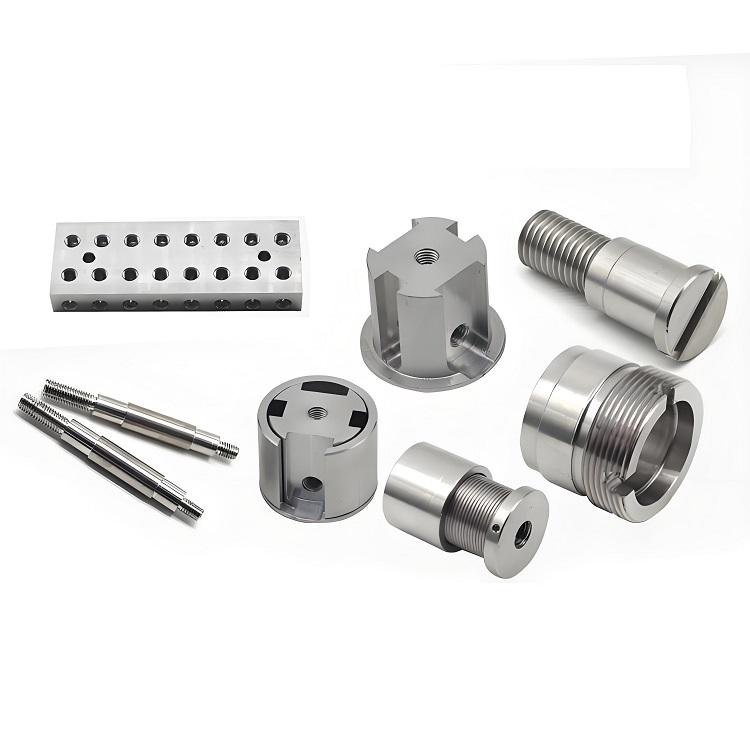
1. Why Special Materials Are “Special” in CNC Machining
Machining special materials is different from standard steel or aluminum work. Their mechanical and thermal properties often oppose conventional machining assumptions.
Table 1: Typical Material Properties Influencing Machinability
| Material Class | Example Alloys | Thermal Conductivity (W/m·K) | Elastic Modulus (GPa) | Hardness (HRC) | Machining Difficulty |
|---|---|---|---|---|---|
| Titanium Alloys | Ti‑6Al‑4V, Ti‑6Al‑4V ELI | ~7–21 | ~110 | 30–40 | High |
| Nickel Superalloys | Inconel 718, Hastelloy | ~9–15 | ~200 | 30–45 | Very High |
| Hardened Steels | HRC 48–60+ steels | ~30–40 | ~210 | 48–60 | Very High |
| Stainless Steel | 316/304 | ~14–16 | ~200 | 22–28 | Moderate |
| Aluminum Alloys | 6061/7075 | ~167–204 | ~70 | 15–22 | Low |
Key Insights:
Low thermal conductivity (titanium, nickel alloys) concentrates heat at the cutting zone, increasing tool wear.
High elastic modulus and hardness raise cutting forces, making stability and fixturing critical.
Machining difficulty directly impacts cycle time, tooling choices, and inspection effort.
2. Typical Applications in Aerospace & Industry
Special materials are selected for properties that standard materials cannot match:
Aerospace: Structural airframe components, engine parts, landing gear interfaces, complex brackets, turbine blades.
Defense: High‑strength components requiring thermal and corrosion resistance.
Medical: Biocompatible implants and surgical tools (often titanium).
Energy & Power: Turbine exhaust structures, heat exchanger components, subsea parts.
Automotive Performance: Lightweight, high‑strength components (e.g., motorsports).
Understanding the intended application helps define critical tolerances, surface finish requirements, and certification needs.
3. China’s Special Material Machining Infrastructure
China’s advanced CNC machining capabilities encompass:
Multi‑axis CNC centers (3‑, 4‑ and 5‑axis)
High‑rigidity machines with thermal compensation
High‑pressure and through‑tool coolant systems
Automation and pallet‑changer systems for throughput
In‑process probing and real‑time feedback systems
Complete metrology labs (CMM, profilometers, optical scanners)
These enable factories to produce complex geometries with high repeatability and tight tolerances.
4. Precision & Tolerance Expectations
Different industries define precision differently. Factory capabilities should align with application requirements.
Table 2: Precision and Surface Finish Benchmarks
| Precision Tier | Dimensional Tolerance | Surface Roughness (Ra) | Typical Use Case |
|---|---|---|---|
| Standard | ±0.05 mm | ≤1.6 µm | Basic industrial parts |
| Precision | ±0.02 mm | ≤1.0 µm | Aerospace frame components |
| High Precision | ±0.01 mm | ≤0.8 µm | Engine interfaces |
| Ultra Precision | ≤±0.005 mm | ≤0.4 µm | Medical implants, critical seals |
These figures represent widely accepted precision ranges in advanced CNC machining operations and should be confirmed with supplier capability studies.
5. CNC Technologies and Their Roles
To machine complex special materials reliably, the following technologies are commonly used:
5.1 Multi‑Axis CNC
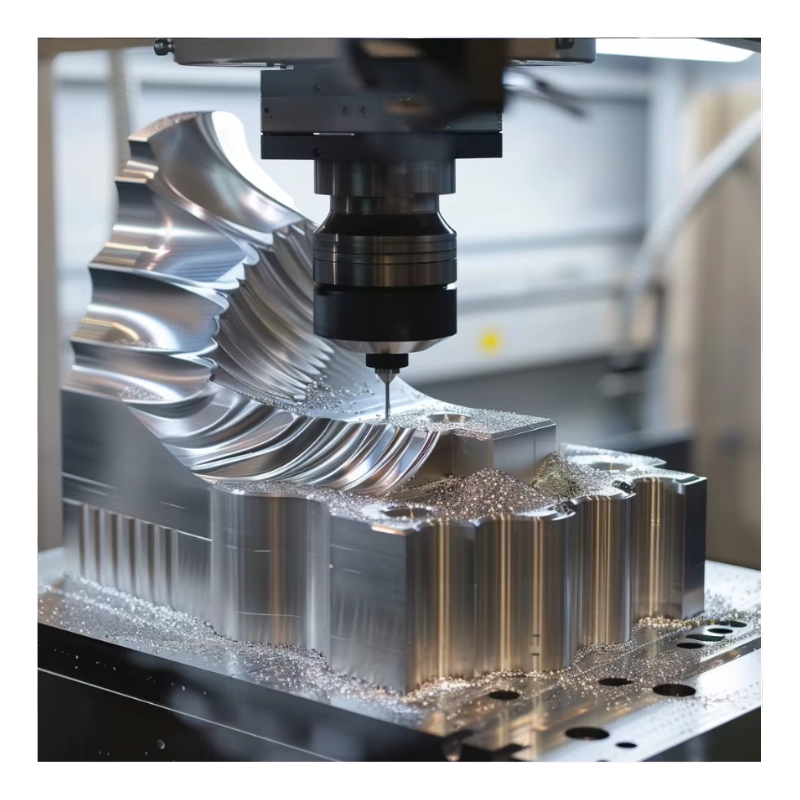
Allows simultaneous control of more than three axes, which reduces setups and improves precision on complex surfaces.
5.2 High‑Pressure Coolant
Helps evacuate chips and reduce heat, which is crucial for materials like titanium and superalloys.
5.3 Through‑Tool Coolant
Delivers coolant directly to the cutting interface, improving tool life and surface integrity in deep features.
5.4 In‑Process Probing
Provides real‑time dimensional feedback to compensate for tool wear or drift.
Factories equipped with these technologies are better suited for aerospace‑grade production.
6. Supplier Evaluation Criteria
Selecting the right machining partner involves evaluating capabilities, quality systems, and risk management processes.
Table 3: Supplier Evaluation Metrics
| Evaluation Category | Key Criteria | Why It Matters |
|---|---|---|
| Equipment Capability | Machine type, axis count, tool changer, spindle torque | Defines what geometries and tolerances are achievable |
| Process Control | Adaptive toolpaths, thermal compensation, in‑process probing | Improves repeatability and precision |
| Quality Systems | ISO 9001, AS9100, SPC, traceability | Assurance of consistent output |
| Inspection Capabilities | CMM, laser scanning, surface profilometry | Verification of demanding specifications |
| Engineering Support | DFM feedback, material advice | Reduces cycle time and risk |
| Cost Transparency | Detailed cost breakdown | Enables fair comparison |
Using a structured scorecard helps differentiate suppliers beyond price alone.
7. Quality Assurance and Inspection
Robust quality systems are essential for precision parts. Inspection must be integrated into the workflow:
First Article Inspection (FAI) for initial builds
In‑Process Inspection to catch deviations early
Final Inspection with Metrology Reports
Statistical Process Control (SPC) to monitor trends
Table 4: Typical Inspection Metrics & Tools
| Measurement Metric | Acceptable Range | Inspection Tool |
|---|---|---|
| Dimensional Accuracy | ±0.005–±0.02 mm | CMM |
| Surface Profile | Conformance to CAD | Optical scanner |
| Flatness/Parallelism | Within tolerance spec | CMM |
| Surface Roughness | ≤0.8 µm (or as defined) | Profilometer |
| Feature Position | Per GD&T callouts | Laser scanning / CMM |
Accurate reports and traceable measurement data help with certification and supplier qualification processes.
8. Common Special Material Machining Processes
For complex components, multiple machining stages may be involved:
Rough Machining
Semi‑Finishing
Finish Machining
Drilling/Tapping
Thread milling
5‑Axis Contour Machining
Process planning often uses CAM software to simulate toolpaths and avoid collisions.
9. Cost Structure and Pricing Considerations
Understanding the cost components helps buyers make informed decisions.
Table 5: Typical Cost Breakdown for Special Material Machining
| Cost Component | Proportion of Total Cost | Driver |
|---|---|---|
| Raw Material | 30–45% | Expensive alloys |
| Machining Time | 25–40% | Slow feeds, multiple setups |
| Tooling & Consumables | 10–20% | Premium tools |
| Inspection & QA | 5–10% | Metrology systems |
| Setup & Engineering | 5–10% | Fixture design & CAM |
| Scrap & Waste | 5–10% | Limited recoverability |
Transparent cost breakdowns allow you to evaluate quotes more fairly and identify areas for optimization.
10. Lead Time and Scheduling
Lead time for special material parts depends on several factors:
Material availability
Fixture design complexity
CAM programming time
Machine scheduling and capacity
Inspection and verification planning
Table 6: Lead Time Influencers for Precision Machining
| Influencer | Typical Impact | Notes |
|---|---|---|
| Material Procurement | Moderate | Exotic alloys may require stock ordering |
| Setup & CAM | High | Detailed programming and fixturing increases time |
| Machining Cycle | High | Lower speeds and multiple passes |
| Inspection | Moderate | Thorough metrology adds time |
| Batch Size | Variable | Larger runs may be more efficient |
Understanding these helps you plan production schedules and set realistic expectations.
11. Best Practices for Working with CNC Factories in China
When engaging with machining services in China:
11.1 Provide Complete Documentation
3D CAD with GD&T
Material specifications
Surface finish requirements
Inspection criteria
11.2 Engage Early on DFM
Early communication about manufacturability reduces cost and rework.
11.3 Request Structured Quotes
Ask for cost breakdowns by material, machining time, tooling, inspection, and post‑process.
11.4 Define Acceptance Criteria
Agree on inspection reports, delivery terms, and revision controls before production.
Clear documentation and early alignment reduce ambiguity and increase first‑pass success.
12. Real‑World Examples & Use Cases
Example A: Aerospace Titanium Component
Material: Ti‑6Al‑4V
Tolerance: ±0.01 mm
Process: 5‑axis concurrent contouring, high‑pressure coolant
Inspection: Full CMM, laser surface scan
Outcome: High conformance and repeatable batch quality
Example B: Nickel Superalloy Turbine Blade Insert
Material: Inconel 718
Features: Deep cavities and compound curves
Strategy: Adaptive milling, rigid fixturing, in‑process probe compensation
Inspection: Optical scanning + CMM
Outcome: Surface finish ≤0.8 µm, on‑tolerance parts
These scenarios illustrate how process control, tooling, and inspection converge to deliver precision outcomes.
13. Emerging Technologies in Precision Machining
China’s advanced machining ecosystem increasingly incorporates:
Digital twin simulations
AI‑assisted toolpath optimization
Sensor‑based adaptive control
Hybrid additive + subtractive systems
Robotic automation for loading/unloading
These technologies improve consistency, reduce cycle time, and support higher precision with fewer manual interventions.
14. Quality Certifications and Compliance
For regulated industries (aerospace, medical), suppliers often support documentation and compliance with:
Customer‑specific quality plans
First Article Inspection (FAI) packages
Full material traceability
Process qualification records
A supplier’s willingness and ability to support rigorous documentation is a strong indicator of capability.
15. Conclusion: Making the Right Choice
Choosing a CNC machining partner for special materials in aerospace and industry is a multi‑factor decision, not based on price alone. Focus on:
✔ Machine capability and stability
✔ Precision and inspection infrastructure
✔ Quality systems and documentation
✔ Cost transparency
✔ Engineering collaboration
✔ Communication and process control
By using the benchmarks and frameworks provided here, you can objectively evaluate machining providers and build long‑term, high‑trust partnerships.
For detailed case studies, tooling strategies, and factory insights related to precision machining of exotic alloys, engineering teams often consult applied examples at https://www.eadetech.com, where advanced material processing methodologies are documented from real production environments.
Related Article


CATEGORIES
LATEST NEWS
CONTACT US
Whatsapp: +8618998453346
Phone: +8618998453346
Tel: +8618998453346
Email: [email protected]
Addr: Room 302, Building D, COFCO Gonghua Project, Zone 20, Honglang Community, Xin'an Street, Bao'an District, Shenzhen City.