English
CNC Machining Solutions for Aerospace-Grade Materials
Writer:admin Time:2023-06-06 00:00 Browse:views
The aerospace industry relies heavily on precision, durability, and performance. Components must withstand extreme environments, including high stress, elevated temperatures, and corrosive atmospheres, while maintaining tight tolerances. Achieving such precision requires advanced CNC machining solutions capable of handling aerospace-grade materials like titanium alloys, aluminum alloys, and nickel-based superalloys.
This article explores the critical aspects of CNC machining for aerospace-grade materials, including material selection, machining strategies, cost considerations, and quality control practices. We also provide realistic reference data and practical insights to help aerospace manufacturers and engineers optimize production.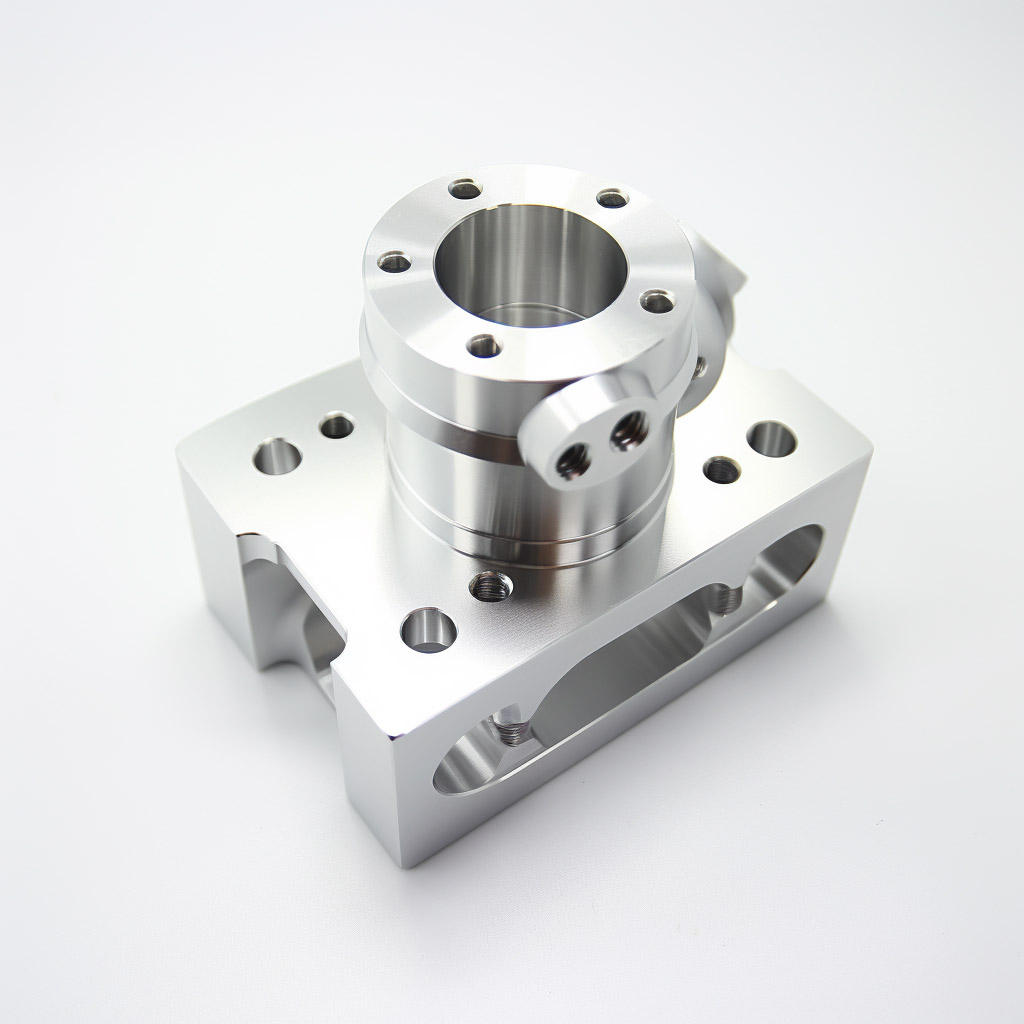
1. Aerospace-Grade Materials Overview
Aerospace-grade materials are specifically designed to combine lightweight properties with high strength, fatigue resistance, and temperature tolerance. Selecting the correct material is crucial for structural integrity, efficiency, and safety.
1.1 Titanium Alloys
Titanium alloys, particularly Ti-6Al-4V (TC4), are widely used in aircraft frames, engine mounts, and landing gear. Titanium offers high strength-to-weight ratio, excellent corrosion resistance, and high-temperature performance, making it ideal for critical aerospace components.
1.2 Aluminum Alloys
Aluminum alloys, such as 7075-T6 and 2024-T3, are preferred for wing structures, fuselage panels, and interior components due to their lightweight and high-strength characteristics. They are relatively easy to machine but require careful control to prevent thermal deformation and tool wear.
1.3 Nickel-Based Superalloys
Nickel-based superalloys like Inconel 718 are indispensable in jet engines and turbine components, where temperatures can exceed 700°C. These materials are extremely hard and abrasive, necessitating specialized cutting tools and machining strategies.
Table 1: Aerospace Material Properties
| Material | Tensile Strength | Yield Strength | Density | Max Temperature | Typical Applications |
|---|---|---|---|---|---|
| Ti-6Al-4V | 895–960 MPa | 830–900 MPa | 4.43 g/cm³ | 600°C | Aircraft frames, landing gear |
| Aluminum 7075 | 572 MPa | 503 MPa | 2.81 g/cm³ | 150°C | Fuselage panels, wing structures |
| Inconel 718 | 1034 MPa | 930 MPa | 8.89 g/cm³ | 1000°C | Turbine blades, engine mounts |
| Stainless Steel 304 | 520 MPa | 210 MPa | 7.93 g/cm³ | 870°C | Structural supports, fasteners |
2. CNC Machining Challenges for Aerospace Materials
Machining aerospace-grade materials presents unique challenges due to hardness, thermal sensitivity, and geometrical complexity.
2.1 Tool Wear and Hardness
Titanium and Inconel are notorious for rapid tool wear because they are abrasive and low in thermal conductivity. Manufacturers typically use:
Carbide tools with specialized coatings (TiAlN, AlTiN)
Cubic Boron Nitride (CBN) inserts for hard superalloys
High-pressure coolant systems to reduce heat and extend tool life
2.2 Thermal Expansion and Distortion
Materials with low thermal conductivity accumulate heat at the cutting zone, causing part distortion. Thin-walled components are especially sensitive, necessitating optimized cutting strategies and clamping systems to minimize deflection.
2.3 Complex Geometry and Multi-Axis Machining
Aerospace parts often feature complex, multi-plane surfaces. 5-axis CNC machines are essential to achieve accuracy without excessive setups, reducing alignment errors and machining time.
3. Precision Tolerances and Surface Requirements
Aerospace components require tight dimensional tolerances and high-quality surface finishes to ensure proper assembly and fatigue resistance.
3.1 Typical Tolerances
Dimensional tolerances: ±0.001–0.005 mm
Flatness/roundness: ±0.01 mm
Surface roughness: Ra ≤ 0.8 µm for high-load parts
Table 2: Aerospace Component Tolerances
| Component Type | Dimensional Tolerance | Surface Finish (Ra) | Example Applications |
|---|---|---|---|
| Turbine Blades | ±0.001–0.005 mm | ≤ 0.8 µm | Jet engines |
| Fuselage Panels | ±0.01–0.001 mm | ≤ 1.6 µm | Aircraft fuselage |
| Landing Gear Components | ±0.002–0.005 mm | ≤ 0.8 µm | Landing gear assembly |
4. Machining Strategies for Aerospace-Grade Materials
4.1 Roughing vs. Finishing
Roughing operations remove the bulk of material, using lower spindle speeds and higher feed rates to reduce heat and tool wear. Finishing operations then achieve tight tolerances and surface quality.
4.2 Cutting Tools and Coatings
High-speed carbide tools: For titanium and aluminum alloys
CVD/Physical Vapor Deposition (PVD) coatings: Improve tool life
CBN/PCD inserts: For nickel-based superalloys and hardened steels
4.3 Coolant and Heat Management
High-pressure coolant (up to 200 bar) is critical for titanium and superalloy machining.
Cryogenic machining is increasingly used for heat-sensitive alloys to minimize thermal distortion.
Table 3: Recommended Cutting Parameters for Aerospace Materials
| Material | Tool Type | Cutting Speed (m/min) | Feed Rate (mm/rev) | Depth of Cut (mm) |
|---|---|---|---|---|
| Ti-6Al-4V | Carbide TiAlN | 30–50 | 0.05–0.15 | 1–3 |
| Aluminum 7075 | Carbide uncoated | 200–400 | 0.1–0.3 | 2–5 |
| Inconel 718 | CBN insert | 20–40 | 0.03–0.1 | 0.5–2 |
| Stainless 304 | Carbide coated | 80–120 | 0.05–0.2 | 1–3 |
5. Cost Considerations in Aerospace CNC Machining
The high cost of aerospace-grade CNC parts is driven primarily by material cost, machining complexity, and inspection requirements.
5.1 Material Costs
Titanium alloys and superalloys represent 35–50% of total costs, while aluminum alloys are less expensive but still require precise machining.
5.2 Machining Time and Tool Wear
Complex geometries and tight tolerances increase machining time, sometimes doubling the cost. Tool wear is another significant factor, especially for nickel-based alloys.
Table 4: CNC Machining Cost Breakdown for Aerospace Parts
| Cost Component | Percentage of Total Cost | Notes |
|---|---|---|
| Material | 35–50% | Titanium, Inconel |
| Machining Time | 20–35% | Dependent on complexity and tolerance |
| Tooling & Inserts | 10–15% | Specialized coatings required |
| Setup & Programming | 5–10% | CAM and fixturing costs |
| Inspection & Finishing | 5–10% | Surface finish and dimensional checks |
| Overhead | 5–10% | Labor, utilities, maintenance |
6. Quality Assurance and Inspection
Ensuring reliability in aerospace components requires rigorous inspection and testing at multiple stages.
CMM (Coordinate Measuring Machines): For dimensional verification
Laser scanning: For surface geometry inspection
Non-destructive testing (NDT): For internal defects (e.g., X-ray, ultrasonic)
Surface roughness measurement: For aerodynamic and fatigue-critical parts
Table 5: Inspection Methods for Aerospace Components
| Inspection Method | Purpose | Typical Applications |
|---|---|---|
| CMM | Dimensional accuracy | Turbine blades, structural brackets |
| Laser scanning | Complex surface verification | Fuselage panels, engine mounts |
| Ultrasonic testing | Internal defect detection | Landing gear, critical fasteners |
| X-ray | Material integrity | Engine components, missile parts |
| Surface profilometry | Surface roughness | Airfoils, aerodynamic surfaces |
7. Advanced Technologies in Aerospace CNC Machining
7.1 5-Axis CNC Machining
Allows multi-plane cuts in a single setup
Reduces errors caused by multiple fixturing
Improves cycle times for complex aerospace parts
7.2 Hybrid Additive + Subtractive Manufacturing
Additive manufacturing creates near-net shapes
CNC finishing ensures tight tolerances and high surface finish
Reduces material waste and machining time
7.3 Automation and Robotic Handling
Improves repeatability and reduces human error
Enhances throughput for high-volume production
Reduces risk of damage to delicate or expensive aerospace-grade components
Table 6: Advanced Manufacturing Solutions
| Technology | Benefit | Example Application |
|---|---|---|
| 5-Axis CNC Machining | Complex geometries in single setup | Wing brackets, turbine blades |
| Hybrid Additive + CNC | Material and time savings | Engine mounts, structural frames |
| Robotic Handling & Automation | Repeatability and safety | Fuselage panels, precision fasteners |
8. Conclusion
The manufacturing of high-reliability CNC parts for aerospace-grade materials demands a combination of advanced machinery, skilled operators, and rigorous quality control. By understanding the challenges posed by titanium, aluminum, and nickel-based superalloys, manufacturers can optimize their processes to achieve the tight tolerances, surface finishes, and reliability required for aerospace and defense applications.
Partnering with experienced providers, such as EadeTech, ensures access to advanced CNC solutions and expertise in machining aerospace-grade materials. Their capability to handle complex geometries, tight tolerances, and critical inspections makes them a reliable partner for manufacturers seeking high-quality aerospace components.
For more details on precision CNC machining solutions, visit EadeTech.
Related Article



CATEGORIES
LATEST NEWS
CONTACT US
Whatsapp: +8618998453346
Phone: +8618998453346
Tel: +8618998453346
Email: [email protected]
Addr: Room 302, Building D, COFCO Gonghua Project, Zone 20, Honglang Community, Xin'an Street, Bao'an District, Shenzhen City.