English
How to Choose Advanced Special Material Machining Factory in China
Writer:admin Time:2025-05-30 01:01 Browse:views
Introduction
In today’s global manufacturing ecosystem, China has become one of the world’s leading hubs for CNC machining, especially for high-complexity, high-precision components made from special and hard-to-cut materials like titanium alloys, nickel superalloys (Inconel, Waspaloy, Hastelloy), hardened tool steels, cobalt chrome, and advanced composites.
However, not all machining factories are created equal. Choosing the right partner — one that can deliver consistent quality, meet tight tolerances, and maintain cost-effective production — requires structured evaluation and deep insight into capabilities, processes, quality systems, and performance metrics.
This article guides you through exactly that. By the end, you’ll know how to:
Identify true advanced machining capabilities
Evaluate machine, tooling, and process maturity
Understand quality assurance and inspection systems
Compare quotes with confidence
Build and manage strategic supplier relationships
Throughout, you’ll find real reference data tables to help you benchmark and compare potential partners.
For engineers seeking practical case studies and applied examples of machining special materials, platforms like https://www.eadetech.com document insights from real factory environments on complex titanium and superalloy projects.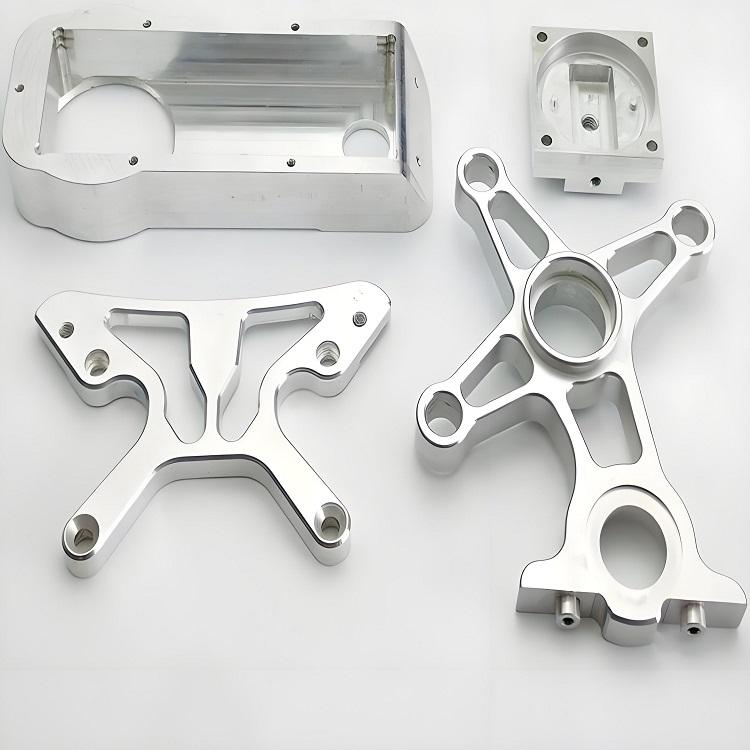
1. Understanding Special Material Machining
Special materials are defined by their challenging machining characteristics — low thermal conductivity, high strength at elevated temperatures, work hardening tendencies, elastic deflection, and abrasive constituents. Examples include:
Titanium alloys (e.g., Ti-6Al-4V, Ti-6Al-4V ELI)
Nickel superalloys (Inconel 718, Inconel 625, Hastelloy)
Cobalt alloys
Hardened steels (>45–60 HRC)
Advanced composites
These alloys are widely used in aerospace, medical, energy, and high-performance industrial applications where strength-to-weight ratio, thermal resistance, and fatigue life matter.
Table 1: Material Properties That Impact Machining Difficulty
| Material Category | Example Alloy | Thermal Conductivity (W/m·K) | Elastic Modulus (GPa) | Hardness (HRC) | Machining Difficulty |
|---|---|---|---|---|---|
| Titanium Alloys | Ti-6Al-4V | ~7–21 | ~110 | ~30–40 | High |
| Nickel Superalloys | Inconel 718 | ~11–15 | ~200 | ~32–42 | Very High |
| Hardened Steels | 45–60+ HRC steels | ~30–40 | ~210 | 45–60+ | Very High |
| Cobalt Alloys | Stellite | ~9–12 | ~200 | ~40–50 | Very High |
| Composites | CFRP/PEEK | Variable | Variable | N/A | Medium-High |
Implication: Lower thermal conductivity concentrates heat at the cutting zone, increasing tool wear and cycle time. High elastic modulus and hardness increase cutting forces and vibration risk. This necessitates specialized tooling, stable fixturing, and controlled toolpaths.
2. What “Advanced Machining” Really Means
An advanced special material CNC machining factory should excel in:
Machine capability (rigid platforms, multi-axis capability)
Tooling & strategy (premium coatings, high-end mills, inserts)
Process control (adaptive feed, thermal compensation)
Quality system (certified processes and traceability)
Inspection & metrology (CMM, laser scanning, in-process probing)
Let’s break these down.
Machine Capability
A factory’s machines define what geometries, tolerances, and repeatability are achievable.
Table 2: Machine Capability Benchmarks for Advanced Materials
| Machine Feature | Why It Matters | Typical Capability Needed |
|---|---|---|
| 3-Axis CNC | Basic prismatic machining | Useful but limited for advanced parts |
| 4-Axis CNC | Indexed rotation | Useful for cylindrical features |
| 5-Axis CNC | Simultaneous contouring | Complex shapes, fewer setups |
| Rigid Spindle | Reduces vibration | High torque at low speed |
| Thermal Compensation | Maintains accuracy | Temperature drift reduction |
| High-Pressure Coolant | Chip/heat management | ≥70 bar, through-tool |
Key Insight: For complex components with multi-sided features, 5-axis CNC is a must-have. It reduces setups, minimizes cumulative tolerance stack-ups, and improves surface finish.
3. Precision & Tolerance Capabilities
Different parts require different levels of precision. Factories should be able to document their capability ranges.
Table 3: Precision Tolerance Levels for Special Material Machining
| Precision Category | Typical Tolerance | Surface Finish (Ra) | Typical Application |
|---|---|---|---|
| Standard | ±0.05 mm | ≤1.6 µm | Non-critical features |
| Precision | ±0.02 mm | ≤1.0 µm | Aerospace structural parts |
| High Precision | ±0.01 mm | ≤0.8 µm | Critical mating features |
| Ultra Precision | ≤±0.005 mm | ≤0.4–0.6 µm | Medical implants, micro parts |
Note: Precision capability depends on machine rigidity, cutting strategy, tooling, and environment (temperature control is critical for ±0.01 mm and tighter).
4. Tooling, Toolpaths & Cutting Strategies
Tooling and toolpath strategy are especially critical for special materials.
Adaptive toolpaths keep cutter engagement constant, reducing force spikes.
Trochoidal milling is effective for nickel alloys and high-strength steels.
Climb milling often yields better surface finish and less chatter on titanium.
Tool materials/coatings common in advanced machining include:
TiAlN / AlCrN coatings for heat resistance
PCD and CBN tools for abrasive composites or hard steels
Ceramic inserts for high-temperature alloys
Consistency in tool life translates to cost predictability.
5. Quality Assurance & Metrology
Advanced machining demands rigorous QA. Precision alone isn’t enough without verification and traceability.
Table 4: Common Inspection & Quality Tools
| Instrument / Method | Purpose | Typical Tolerance Capability |
|---|---|---|
| CMM (Coordinate Measuring Machine) | Dimensional verification | ±0.005 mm |
| Laser Scanning | Full contour capture | High resolution surface mapping |
| Surface Profilometer | Ra measurement | ≤0.2 µm detection |
| In-Process Probing | Adaptive correction | Immediate in-cycle feedback |
| Optical Comparator | Feature comparison | Visual graphing of geometry |
A factory should be able to provide inspection reports, process cards, and first article inspection (FAI) documentation. These are critical for aerospace and medical components.
6. Quality Systems & Certifications
Not all factories have formal systems. Look for adherence to standards and documented processes.
Table 5: Quality System Expectations
| Standard / Practice | What It Ensures |
|---|---|
| ISO 9001 | Quality management system |
| First Article Inspection (FAI) | Verification of initial part |
| SPC (Statistical Process Control) | Ongoing process control |
| Material Traceability | From raw stock to finish |
| Calibration Programs | Inspection equipment accuracy |
| Documented Work Instructions | Consistency across batches |
A factory lacking controlled documentation (FAI, SPC) can produce inconsistent results — especially undesirable in regulated industries.
7. Cost Structures & Pricing Transparency
Pricing for special material machining involves multiple cost layers. Understanding the breakdown helps you compare quotes effectively.
Table 6: Typical Cost Components for Advanced Machining
| Cost Component | Typical % Range | Notes |
|---|---|---|
| Material | 30–45% | Titanium, superalloys are expensive |
| Machining Labor | 25–40% | Slow feeds, multiple setups |
| Tooling & Consumables | 10–20% | High-end tools, frequent changes |
| Inspection / QA | 5–10% | Metrology checks add time |
| Fixtures & Setup | 5–10% | Custom jigs and validations |
| Scrap / Waste | 5–10% | Hard materials, limited reclamation |
Tip: When comparing quotes, ask for detailed cost breakdowns — raw material, machine hours, tooling allowances, and QA efforts — rather than flat per-part prices.
8. Supplier Evaluation Framework
To compare machining factories objectively, use a weighted scorecard.
Supplier Evaluation Scorecard
| Evaluation Criterion | Weight (%) | Notes |
|---|---|---|
| Machine Capabilities | 25% | Multi-axis, rigidity, thermal systems |
| Precision Track Record | 20% | Ability to hit tight tolerances |
| Quality Systems | 15% | ISO, FAI, SPC documentation |
| Tooling & Strategy | 10% | Adaptive paths, coatings |
| Inspection & Metrology | 15% | CMM, laser scanning, in-process probing |
| Communication & Support | 10% | Responsiveness & engineering input |
| Cost Transparency | 5% | Detail in quotes |
Assign scores (e.g., 1–10) under each category, then weight them to produce a comparative score across suppliers.
9. Lead Time Drivers & Planning
Lead time for advanced material parts typically includes:
Material procurement (some alloys not stocked)
Fixture design
CAM programming & simulation
Roughing, semi-finish, finish passes
Inspection & reporting
Strategic Planning: Provide engineering files, tolerance definitions, inspection priorities, and expected deliverables upfront to minimize iterations.
10. Communication & Project Coordination
Effective communication mitigates risk:
Clear engineering documentation (CAD, GD&T)
Tolerance prioritization (functional vs non-functional)
Design for Manufacturability (DFM) consultation
Inspection criteria clarification
Change control process
Factories with strong project management practices reduce ambiguity and rework.
11. Red Flags and Risks to Avoid
Avoid suppliers that:
Provide vague or unusually low quotes without detail
Lack documented quality systems
Cannot produce historical precision records
Communication is slow or unclear
Cannot provide inspection data or measurement reports
A reputable partner is transparent about capability limits and risk mitigation.
12. Supplier Management & Long-Term Collaboration
Once chosen, the best suppliers become partners — collaborating on:
DFM improvements
Cost reduction by design optimization
Process standardization
Continuous quality improvements
Yield improvement strategies
Strategic partnerships reduce total cost of quality and improve delivery reliability.
13. Case Examples of Successful Advanced Material Machining
Example A: Aerospace Titanium Bracket
Material: Ti-6Al-4V
Tolerance: ±0.01 mm
Processes: 5-axis CNC, high-pressure coolant, in-process probing
Inspection: Full CMM + profile scanning
Outcome: First-pass yield > 98%
Example B: Nickel Superalloy Turbine Component
Material: Inconel 718
Tolerance: ±0.02 mm
Processes: Adaptive toolpaths, rigid fixturing
Inspection: CMM + laser scanning
Outcome: Consistent batch uniformity
These examples illustrate how advanced machining strategy, tooling, and inspection come together in high-precision contexts.
14. Logistics & Global Supply Chain Considerations
When sourcing from China, also evaluate:
Packaging standards for precision parts
Export documentation and customs compliance
Shipping lead times and freight options
Risk of damage or mislabeling
Professional machinists provide export packs with inspection reports, certificates, and serialized measurement data.
15. Conclusion: Choosing the Right Machining Factory
Choosing an advanced machining factory for special materials is not about lowest bid, but about capability, quality, transparency, and process maturity. The ideal partner:
✔ Has proven multi-axis CNC capability
✔ Demonstrates precision continuous control
✔ Maintains robust quality and inspection systems
✔ Communicates clearly and collaborates early
✔ Provides detailed, transparent costing
Using structured evaluation — like the tables and frameworks above — helps you make informed decisions that reduce risk, improve part quality, and optimize total cost of ownership.
For engineers seeking additional technical case studies and practical insights into advanced machining processes — especially for titanium, nickel alloys, and superalloys — https://www.eadetech.com offers real application examples and process documentation drawn from experienced manufacturing environments.
SEO Keywords Covered
special material machining, advanced CNC machining China, precision machining titanium, nickel superalloy CNC, superalloy machining services, CNC factory evaluation, 5-axis machining, quality systems CNC, machining cost breakdown.
Related Article


CATEGORIES
LATEST NEWS
CONTACT US
Whatsapp: +8618998453346
Phone: +8618998453346
Tel: +8618998453346
Email: [email protected]
Addr: Room 302, Building D, COFCO Gonghua Project, Zone 20, Honglang Community, Xin'an Street, Bao'an District, Shenzhen City.